
Eurovision 2024: Netherlands disqualified, Ireland's uncertainty and historic bans and withdrawals


With news that the Netherlands have been disqualified from this year’s Eurovision Song Contest final, have any other countries been thrown out of the event?
With the Eurovision Song Contest final, taking place in Malmo Arena, Sweden in a few hours time, when a lot of the focus should be on the music instead, it’s taken a backseat to what has been a sensational 48 hours of controversy.
As reported on Friday (May 10 2012), the Netherlands’ entry Joost Klein was refused the opportunity to perform with what the European Broadcasting Union cited as an “incident” involving a female Eurovision production member.
That was later confirmed when Swedish Police stated that they were investigating an allegation about the Netherlands’ act, prompting the EBU to make the decision to disqualify the Netherlands from this evening’s event.
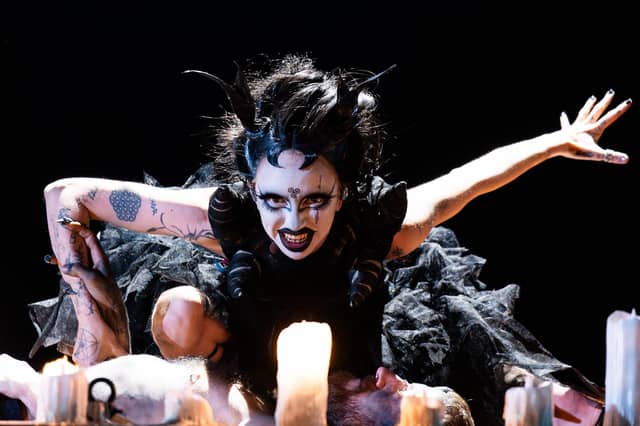
There has also been speculation regarding Ireland’s entry performing this evening; Bambi Thug took to social media to reveal they missed the flag parade and dress rehearsals due to an issue they required the EBU to resolve.
The Irish delegation believes that comments made on Israel’s Eurovision broadcast, Kan, contravened the rules stated in the EBU about discussions regarding other contestants in a “disparaging” nature.
Speculation on X (Twitter) is that Ireland may choose not to perform, with several other acts also rumoured to potentially not take part in this year’s event, while France’s Slimane, one of the Eurovision “Big Five” entrants, took a moment during his dress rehearsal to reiterate the themes of peace and unity at the event.
So have the Netherlands been the first act to be disqualified from Eurovision, and have any other acts refused to take part because of political or financial motivations - Eurovision is an expensive event to broadcast, so some of the reasons countries have since not taken part explain.
What other countries have been disqualified or banned from the Eurovision Song Contest?
Jordan (1978)
Jordan refused to broadcast the Israeli entry during the 1978 Eurovision Song Contest, which led to the country's disqualification from the following year's contest. This decision was in line with Jordan's policy of not recognising Israel, but it resulted in repercussions from the EBU and the country has yet to be invited since. Jordan previously broadcast the Eurovision Song Contest on multiple occasions during the 1970s. It aired the 1974, 1975, 1977 and 1978 editions of the competition.
Lebanon (2005)
Lebanon was disqualified from the Eurovision Song Contest in 2005. The country had initially planned to participate with the song "Quand tout s'enfuit" by Aline Lahoud. However, Lebanon withdrew before the contest due to political reasons related to the Israeli-Palestinian conflict. Due to legislation prohibiting Israeli content from being broadcast on Television in Lebanon, Télé Liban was forced to withdraw from the contest. As a result of the withdrawal three months after the deadline, the EBU served the broadcaster a ban from the contest for three years.
Albania (2012)
Albania was disqualified from participating in the Eurovision Song Contest in 2012 due to failure to submit the required paperwork on time. The decision was made by the European Broadcasting Union (EBU).
Romania (2016)
Romania was disqualified from the Eurovision Song Contest in 2016 due to unpaid debts to the EBU. The country's public broadcaster, TVR, was unable to pay its debt, resulting in Romania's disqualification from the contest.
Have any countries refused to participate in the Eurovision Song Contest?
Georgia (2009)
Georgia withdrew from the Eurovision Song Contest in 2009 due to a dispute over their entry lyrics. The Georgian entry, "We Don't Wanna Put In" by Stephane & 3G, was seen by the European Broadcasting Union (EBU) as potentially politically charged, violating the contest's rules against political content. Despite efforts to revise the lyrics, Georgia chose to withdraw in protest.
Morocco (1980)
Morocco participated in the Eurovision Song Contest once, in 1980. Their entry, "Bitaqat Hob" by Samira Bensaïd, failed to receive enough votes to progress to the final, and Morocco did not participate in the contest again.
Turkey (2013)
Turkey announced its withdrawal from the Eurovision Song Contest in 2013, citing dissatisfaction with the contest's voting system and concerns over the quality of the songs. Turkey has not participated in the contest since then.