
West Nile Virus: As virus is found in UK mosquitoes for the first time, what are the symptoms? Is there a vaccine?

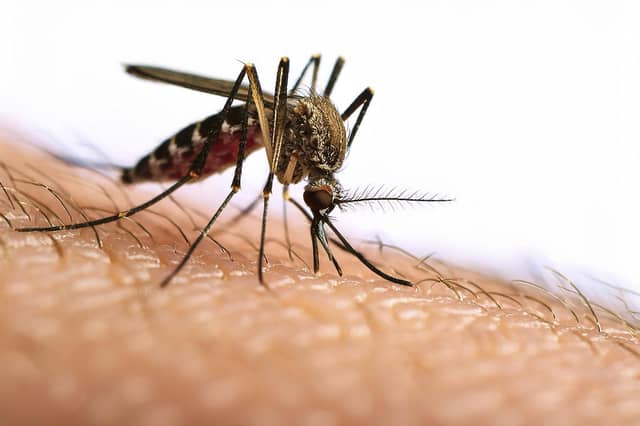

A killer virus has for the first time been found in UK-caught mosquitoes.
The UK Health Security Agency and the Animal and Plant Health Agency have identified fragments of West Nile Virus genetic material in mosquitoes collected in Britain.
West Nile Virus is part of the Flaviviridae family, which also includes the viruses that cause dengue and yellow fever. It is usually found in birds, and is mostly spread by mosquitoes that bite birds. Mosquitoes can transmit the virus to humans or horses.
The fragments were detected through samples tested by the APHA which came from mosquitoes caught by the UKHSA from wetlands on the River Idle near Gamston in Nottinghamshire, in July 2023. So far, overall, 32,000 mosquitoes have been tested under the scheme.
A statement from the UKHSA says: “The mosquitoes were pooled into groups of 10 for testing, and fragments of West Nile Virus genetic material were identified in two of the pools. The other 198 were negative. This is the first evidence of West Nile Virus detected in a mosquito in the UK. A further 198 pools from the same site tested negative for the virus.”
What is West Nile Virus? What are the symptoms?
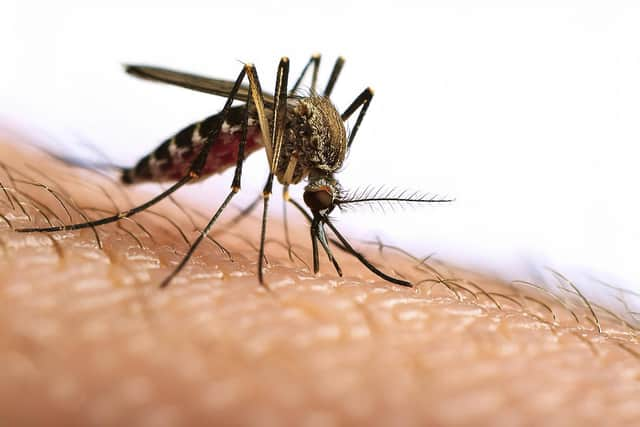
West Nile Virus spreads through mosquito bites. While most people who get infected don’t have symptoms, about 20 per cent may develop a fever, headaches, body aches and other flu-like symptoms. Some of these cases may see the virus infect the nervous system and cause serious brain or spinal cord inflammation - meningitis or encephalitis.
The virus was first identified in Uganda, and is now endemic around the world, including parts of Europe, Africa, the Middle East, West and Central Asia, and North America, as well as South America, USA and Australia.
UKHSA said: “The geographic range of West Nile Virus has expanded in recent years to more northerly and western regions of mainland Europe.
“The UKHSA has assessed the risk to the general public as very low, but is issuing advice to healthcare professionals so that patients with encephalitis of unknown cause can be tested as a precaution through UKHSA’s Rare and Imported Pathogens Laboratory.”
Has anyone caught West Nile Virus in the UK?
The UKHSA says nobody has developed West Nile Virus from a UK mosquito bite. There have been seven cases reported in the UK since 2000, but all of these were in people who had travelled abroad.
It does not think that the virus is circulating in birds or mosquitos in the UK, but is bringing in extra surveillance and testing because of the discovery findings, adding that the main risk of West Nile Virus for UK residents continues to be travel to endemic areas overseas.
Is there a West Nile Virus vaccine?
There is no human vaccine available for West Nile Virus, although there is one for horses. Despite numerous vaccine candidates being tested, none have progressed beyond Phase II clinical trials.
What has the UKHSA said about West Nile Virus?
Dr Meera Chand, UKHSA Deputy Director for travel health, zoonoses, emerging infections, respiratory and tuberculosis, said: “While this is the first detection of West Nile Virus in mosquitoes in the UK so far, it is not unexpected as the virus is already widespread in Europe.
“The risk to the general public is currently assessed as very low. Vector research of this kind is designed to give us early warning of potential threats so that we can enhance our disease surveillance and control activities and ensure patients receive appropriate testing.”
Dr Arran Folly, Arbovirologist at APHA and lead of the Vector-Borne RADAR project concluded: “The detection of West Nile virus in the UK is part of a wider changing landscape, where, in the wake of climate change mosquito-borne diseases are expanding to new areas. Only through continued surveillance can we assess the risk to animal and public health.
“Our primary focus is to understand how viruses move into the country and how they are transmitted. Combined this can help us identify areas that may be at increased risk of outbreaks.”
Will West Nile Virus take hold in the UK?
Professor Paul Long, microbiologist at King’s College London, said: “Although virus-infected mosquitos have been found in the UK there's no evidence yet that these mosquitoes will survive in the UK climate, although prolonged warm weather does increase the chances.”
What do animal experts say about West Nile Virus?
Dr Jolyon Medlock, head of medical entomology and zoonoses ecology at UKHSA, added: “Our surveillance, which led to this discovery, monitors for mosquitoes across Britain to understand the distribution, density and activity across the country. We also monitor mosquito nuisance biting, so anyone experiencing this can contact our mosquito surveillance scheme and provide an image or sample.
“Mosquitoes breed in a range of natural wetlands, but can also be common in gardens, breeding in container habitats like water butts and buckets. Reducing opportunities for some mosquito species to access these containers with lids, or turning them over, can reduce mosquitoes numbers around our homes.
“Mosquitoes in the UK are also commonly found in wet woodland areas and various aquatic habitats, including ponds, ditches, marshes, and even garden water butts or cisterns. To avoid being bitten by a mosquito when in these types of areas, wear long-sleeved clothing and trousers to cover your arms and legs, use insect repellent on your skin (ideally one that contains the ingredient DEET), close windows and doors whenever possible, or use blinds or screens.”