
The chicken ick phenomenon: What is it, why does it happen and can you stop it?

It’s the latest query to hit the internet - so what is “chicken ick” and why does it happen?
A sudden dislike for a food we previously enjoyed is not unheard of. Pregnant women, for example, are often cited as having sudden changes in their tastes, often resulting in unusual cravings. However, a phenomenon affecting more than just those expecting has come to light on social media.
Lorenzi Stafford, an associate professor in psychobiological psychology has done some digging on what might be behind the sensation of sudden changes to our tastes, which has become known online as the 'chicken ick'’.
The phenomenon has achieved notoriety on the web, with thousands of foodies describing how they have suddenly become disgusted by a former favourite on their plate. It can happen suddenly, sufferers said, and now the psychology expert has done some research on what might cause it - and how people might get over it.
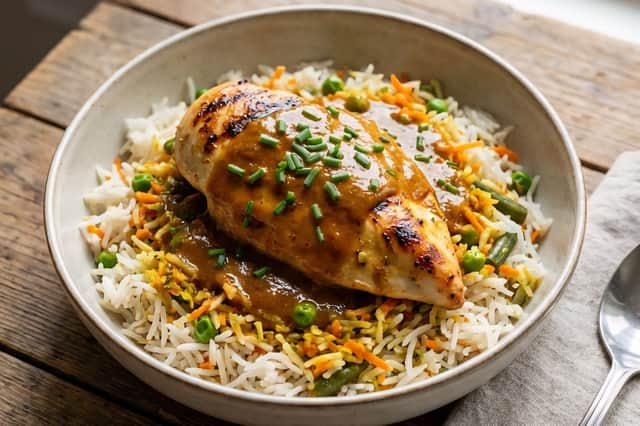

What is the 'chicken ick?
The phenomenon often involves a person "suddenly becoming disgusted by chicken, sometimes even mid-bite – despite having been able to eat the food just fine previously", wrote Prof Stafford, from the University of Portsmouth, in an article for The Conversation.
His research into the 'ick' is centred on how eaters' sensory system - mainly smell and taste - affects behaviour. "When it comes to the 'ick', it’s all about how we deal with our disgust response," he said.
What causes 'chicken ick'?
"There are a number of reasons why you might suddenly become 'weird' about a food that you used to be fine with," the professor went on. “Maybe one time you noticed your chicken tasted, smelled or looked different than it did other times."
"This can lead to a mismatch in what’s expected, which can cause your feelings towards that food to suddenly change. It might also be related to whether you prepared the chicken in a different way to normal. Adding a new ingredient which changes the smell or flavour profile of the dish can also trigger feelings of disgust."
Prof Stafford went on: "Another possible reason has to do with what you were doing before you got the ick. If you were scrolling on social media looking at unappetising meals before starting to cook your own meal, this can influence the way you subsequently feel about your own food.
"Or, if you were preparing the dish near someone who expressed disgust (even if they only made a face), this can influence your own disgust response.
"The reason this occurs is explained by the human tendency to mimic others via mirror neurons (brain cells that are involved in empathy and imitation) and the related process of emotional contagion – the unconscious process of 'catching' the emotion of others. Some of us are also more sensitive to experiencing disgust than others."
Another important factor, the professor said, is "how hungry you are at the time". "If you aren’t very hungry, you might be more particular about unexpected food features – such as a different smell, texture or flavour," he went on.
"On the other hand, when you’re really hungry, you understandably tend to be less sensitive to disgust and may be less likely to notice things that might otherwise have turned you away."
And, gender may also impact our tendency towards the ick, with research on disgust showing women have a higher sensitivity to disgust than men, according to Prof Stafford.
"It’s theorised that such gendered differences in disgust sensitivity developed as an evolutionary response to be choosier when selecting potential mates and protect offspring from disease," they added. "Disgust is also heightened during pregnancy and appears to be related to immune function."
How to get over 'chicken ick'
Professor Stafford said there are ways to get over the sensation and return to your favourite food stuffs. Two ways the professor suggests for tackling the 'chicken ick' are to prepare the dish differently next time, or use a different cut, which may not trigger the response you previously felt.
They also suggested having someone else cook it for you, or go out to eat and order that dish, as it may be something in the preparation of the food has triggered a disgust response, such as the uncooked texture, smell, or something else.
"Removing the cues that cause the 'ick' in the first place should act as a reset so you can enjoy the food again," the professor went on. "If that still does not work, it could be that you’ve formed a negative association with the food which needs to be unlearned."
The best way to approach this challenge, they said, is to accompany your 'ick' with something positive, like a favourite side dish, or music, or a movie - and repeating it.