
Cannabis was being used to get high 2,800 years ago, archaeologists discover

This article contains affiliate links. We may earn a small commission on items purchased through this article, but that does not affect our editorial judgement.
Cannabis was being used for its mind-altering effects almost 3,000 years ago, according to researchers who uncovered evidence in an ancient tomb.
People were using cannabis for its mind-altering effects almost 3,000 years ago, according to new research.
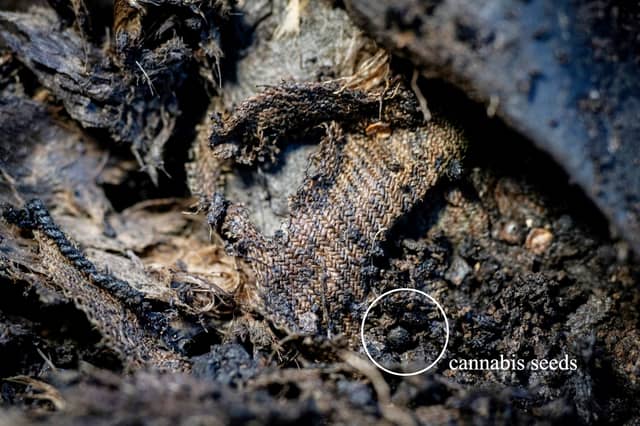
Archaeologists discovered hundreds of cannabis seeds inside an ancient tomb in Siberia, alongside chemical traces in human hair suggesting the plant was consumed for its intoxicating properties.
The burial site, located in the South Siberian Republic of Tyva in what is now Russia, is believed to belong to high-ranking members of Scythian society. Radiocarbon dating of six seeds, alongside other dating evidence, placed them in the early 8th Century BC, meaning cannabis was being used as a drug around 2,800 years ago.
The study, published in the journal Science, involved analysing preserved human hair from the tomb. Researchers discovered chemical traces consistent with cannabinol (CBN), which can form when THC, the main intoxicating compound in cannabis, oxidises. Weaker signals consistent with THC itself were also detected.
Lead author Dr Gino Caspari, from the University of Bern in Switzerland and the Max Planck Institute of Geoanthropology in Germany, said: “The seeds show that cannabis played an important role in the rituals surrounding the burial.”
The chemical evidence in the hair was particularly important because cannabis seeds alone cannot prove the plant was being used to get high. Historically, cannabis has also been used to produce oil and fibres, as well as for medicinal purposes.
Dr Caspari said: “This study is particularly insightful because it combines the analysis of plant remains with molecular traces in the human body.”
Researchers cannot establish how much cannabis was consumed or whether it was inhaled or swallowed. They also believe the seeds probably came from wild plants, although it is unclear whether they were deliberately cultivated for their psychoactive properties.
The discovery also provides an insight into the elaborate burial customs of the Scythian elite.
The tomb had previously revealed evidence of extensive animal sacrifices, including 18 horses arranged on the burial mound. Several dozen additional horse sacrifices and scattered human bones have since been discovered, suggesting human sacrifice may also have taken place.
Researchers believe the cannabis seeds were deliberately included as part of the burial rituals. Dr Caspari said: “In this princely tomb, the burials were accompanied by extensive horse sacrifices and, most likely, human sacrifices as well.”
The team is now investigating the plant remains further using DNA sequencing, which could help uncover more about the domestication and spread of cannabis.
Dr Caspari said: “DNA preservation is excellent in this case. This will help us learn more about the history of the domestication and spread of this crop soon.”

🎤✨ Three nights away with live entertainment from £164? Parkdean’s Celebrity Weekenders bring the party this November! 🧳
🕺🎶 Relive your favourite decades with themed breaks spanning 80s hits, 90s nostalgia and boybands vs girlbands!
🏡🏊 Accommodation, entertainment and access to swimming facilities are included, with silent discos and fancy dress adding to the fun! 🎉
🌊⭐ Explore Parkdean’s Celebrity Weekenders across five parks, with prices and line-ups varying by break and availability 📅Click here to find out more