
French government collapse: PM Francois Bayrou ousted by MPs in confidence vote

The French Prime Minister Francois Bayrou has been ousted by MPs after losing a vote of confidence.
France is looking for its fourth prime minister in a year after the government collapsed after losing a vote of confidence today (September 8). President Emmanuel Macron will now commence the search for a new leader of the parliament.
It comes after Prime Minister Francois Bayrou was ousted in the poll of lawmakers, which he lost 364 to 194 - meaning he was obliged to resign - after unveiling plans to slash public spending to tackle a mounting debt problem.
However, his opponents seized the opportunity of a vote on the issue to force 74-year-old Bayrou out of office, having served just nine months in the role.
The result means Mr Bayrou’s short-lived minority government is constitutionally obliged to submit its resignation to Macron, launching another period of uncertainty for the country - Europe’s second largest economy - as it wrestles with challenges including budget difficulties, wars in Ukraine and Gaza, and the shifting priorities of US President Donald Trump.
Mr Macron had two weeks to prepare for the potential collapse, as Mr Bayrou announced in August he’d seek a confidence vote on his unpopular budget plans. However, speculation is rife as no clear frontrunner for the role has emerged.
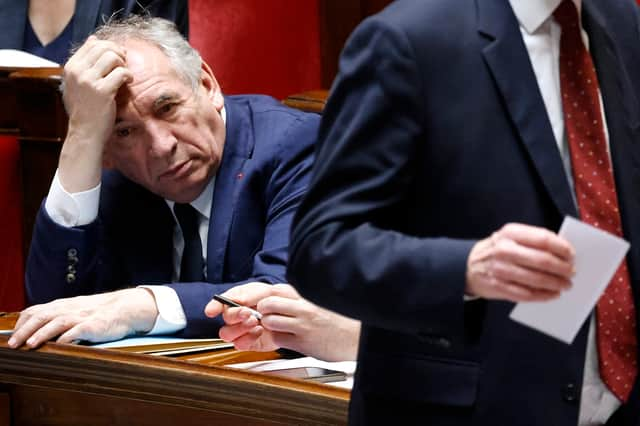

The latest departure comes after Gabriel Attal left as prime minister in September 2024, followed by former Brexit negotiator Michel Barnier, who went in December, and now Mr Bayrou, meaning President Macron must once again find a replacement that would be acceptable to a lower house of parliament stacked with his opponents.
Under the French system, Macron still holds substantial foreign policy powers - including European affairs - and remains the commander in chief of the nuclear-armed military. But domestically, the 47-year-old president’s ambitions are increasingly facing ruin.
In June last year, Macron gambled on calling a nationwide election, which he hoped would strengthen his position - but failed - returning a split legislature with no dominant party, meaning his agenda has stalled.
Since then, without a workable majority, his minority governments have lurched from crisis to crisis, surviving on the whim of opposing political blocs on the left and far-right that don’t have enough seats to govern themselves but can, when they team up, topple Mr Macron’s choices.
It was in this situation Mr Bayrou rolled the dice by calling the confidence vote - a decision that quickly backfired as left-wing and far-right legislators seized the opportunity to oust his government, seeking to increase pressure on Macron.
Before the vote, Mr Bayrou conceded it was a gamble in his final address to the National Assembly as PM, but said France’s debt crisis compelled him to seek legislative support for remedies, in the face of what he called “a silent, underground, invisible, and unbearable haemorrhage” of excessive public borrowing.
“The greatest risk was to not take one, to let things go on without changing anything, to go on doing politics as usual,” he said. “Submission to debt is like submission through military force. Dominated by weapons, or dominated by our creditors, because of a debt that is submerging us. In both cases, we lose our freedom.”
At the end of the first quarter of 2025, France’s public debt stood at 3.346 trillion euros, or 114% of gross domestic product. Debt servicing remains a major budget item, accounting for around 7% of state spending.