
Motorists must pass 20-metre roadside eye test or could face £1,000 fine

Police are carrying out roadside eyesight checks across Britain, with motorists who cannot meet the legal vision standard risking a £1,000 fine, penalty points or even losing their licence.
Motorists could be stopped by police and ordered to take an eyesight test at the roadside as part of a major national crackdown.
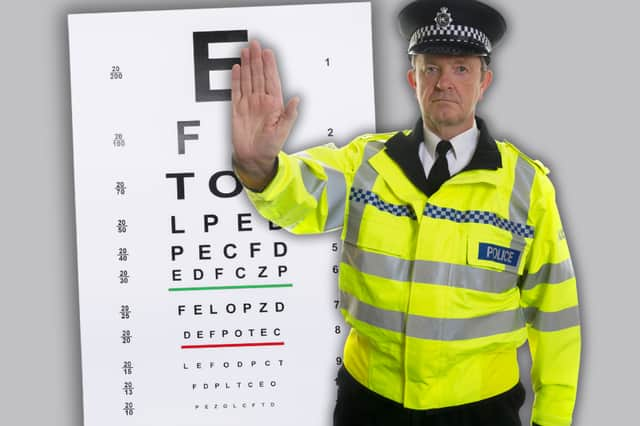

Drivers pulled over during the campaign may be asked to read a vehicle registration plate from 20 metres away, roughly the length of five parked cars.
Those who fail could face a £1,000 fine, three penalty points or even lose their driving licence.
Police forces across Britain are taking part in the Is Your Vision Roadworthy? campaign, which is running from October 26 to November 8 amid concerns that huge numbers of drivers may be behind the wheel with eyesight below the legal standard.
Research suggests more than 1.2 million motorists in England could be driving with defective eyesight.
Poor vision was linked to 18 deaths on UK roads in 2025, while around 3,000 people are seriously injured every year in incidents involving drivers or riders with defective or uncorrected vision.
What happens if police stop you for an eyesight test?
Drivers selected for a roadside check will normally be asked to read a number plate from 20 metres away in daylight.
They can wear the glasses or contact lenses they normally use while driving.
Under UK law, motorists must be able to read a modern number plate from that distance. They must also meet minimum standards for visual acuity and field of vision.
Anyone who needs glasses or contact lenses to meet the legal standard must wear them when driving.
Failing the roadside test can have serious consequences.
Motorists can be fined up to £1,000, receive three penalty points or be disqualified from driving.
Police can also use a fast-track process commonly known as Cassie's Law if they believe a motorist's eyesight makes them unsafe to continue driving.
That allows officers to urgently notify the DVLA, which can revoke a driver's licence immediately.
The procedure was introduced following the death of 16-year-old Cassie McCord, who was killed in Essex in 2011 by a motorist who had previously failed a police eyesight test.
More than one million motorists may be below legal standard
The latest national roadside study tested 3,778 drivers across 32 police forces in England, Scotland and Wales.
It found 59 motorists failed the eyesight test outright, with 23 having their licences revoked immediately.
In England, 2.6% of motorists tested failed, a rate researchers estimated could mean more than 1.2 million licence holders are driving with eyesight below the required standard.
Older motorists recorded some of the highest failure rates, with 7.3% of drivers aged over 80 unable to pass the roadside screening.
Two-thirds of motorists who failed were also not wearing glasses they needed for driving when they were stopped.
Almost a third of all drivers questioned had not undergone an eyesight test during the previous two years.
Police warning to drivers
Northamptonshire Police is among the forces supporting the latest national campaign.
Roads policing inspector Dave Forman said: “Most drivers know that worn or defective tyres on their vehicle can result in a fine and penalty points, but they are less likely to realise that driving with uncorrected defective eyesight is punishable with a fine of up to £1,000, three penalty points and possible disqualification.”
He added: “Drivers who fail to meet the required standards are not only breaking the law but putting themselves and other road users at risk.”
Police are urging motorists to have their eyesight checked at least every two years because vision can deteriorate gradually without drivers noticing.
Results from the roadside stops carried out across the country will be used to help shape future road safety campaigns.