
Plug-in solar gets UK launch date as bargain kits prepare to hit shops


This article contains affiliate links. We may earn a small commission on items purchased through this article, but that does not affect our editorial judgement.
A major law change is expected to open the door to lower-cost DIY solar kits, with Currys, B&Q, Lidl and Amazon among the retailers linked to the new market
Bargain solar energy systems that save households money off their energy bills could be on sale in UK stores soon, after the government announced a date for a crucial law change.
Currently, "plug-in solar" systems are not allowed in the UK, despite many European countries letting householders send power back into their homes through an AC socket.
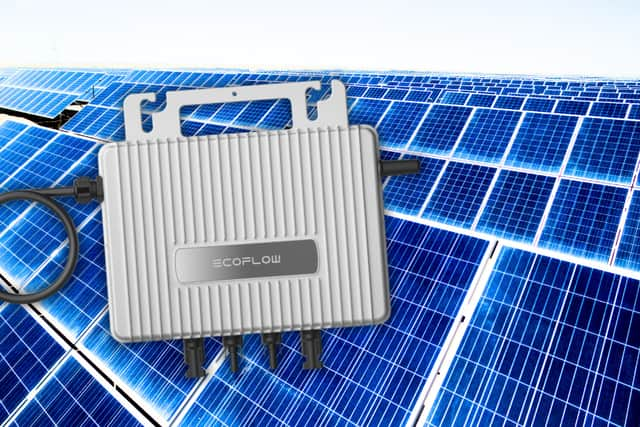
These simple plug-in solar energy systems require nothing more than a solar panel, a microinverter, and a connection to the home's electrics, but currently they need to be wired in by a professional, as per the regulations that have been in place for years.
However, these regulations are due to change, and the Government has announced the changes will come into effect on Thursday, August 27.

While this leaves only a few days of the meteorological summer to enjoy the best savings solar panels can offer, big retailers in the UK will be keen to capitalise on the law change, and offer bargain kits to consumers.
Currently, Currys, B&Q, Lidl, and Amazon are among the retail giants that are known have been discussing the law change, which was consulted on through June.
This could mean that home owners could shop online or in store for solar energy kits costing a few hundred pounds, and these kits could cut up to a pound a day off electricity bills.
At a time when energy costs are climbing, and energy security is becoming a buzz-word, the move to allow people to harness their own free energy is likely to be widely welcomed, despite initial push-backs from the electrical trades industry bodies.
Although we still have to professionally install our solar systems, there are plenty of options on the market already
A solar system in a domestic property needs a few key elements. Solar panels, a microinverter, and the cabling and fuse. That’s the basics, but you might choose to add battery storage.
A cheap kit can be bought online, with prices starting at £299 - here’s one we found on eBay. You will need to budget for an electrician to wire it in though, it’s not currently legal to plug it in to a three-pin socket
EcoFlow’s Stream series, one of the most popular premium DIY solar systems, starts with a £150 microinverter, which you can bundle with panels, or there’s a more comprehensive system available which comprises a battery too. Budget around £1,000 for panels and a Stream unit.
Prices of the Stream systems can quickly creep towards £2,000 for a bundle, and you might need to add some cabling or smart sensors, as well as pay for an electrician to visit. For a powerful 2kWh setup including four panels and installation, £2,000 is a realistic figure to aim for - but basic systems can cost half that.
To enable the new legislation to slip in smoothly, a new British Standard has been drawn up, and it is this that will be coming into force on August 27.
The Plugs and Sockets etc. (Safety) Regulations 1994 and Electricity Safety, Quality and Continuity Regulations 2002 (Amendment) Regulations 2026 gives home owners permission to buy a solar kit, and to plug the microinverter directly into a three-pin socket.
Currently, the kits are on sale in various forms, but a qualified electrician must wire them in to the home's electricity supply.
Enabling owners to plug them in directly is likely to lead to a surge in DIY solar systems entering the market, many of which have been offered to customers in Europe for some time.
And although many of these systems are offered with batteries to store unused electricity generated from the solar panels, the government has not yet drawn up a specification that allows for battery use.
However, while we wait for a renewed message that allows for electricity storage, electric car owners can effectively channel unused energy into their car batteries, if they plug them in on sunny days.
The new legislation limits the total solar input to the home to 800 watts, which is in line with European regulations, and solar input from the panels can be no more than 2,000 watts.
It is expected that, when the solar kits hit the stores, they are likely to cost around £400 - but there will be no need for planning permission or, after August 27, any professional installation.

🏡✨ For 19p, you could be in with a chance of winning a £1.85 million dream home bundle in Lancashire, complete with five en-suite bedrooms, 1.77 acres, smart-home tech, a Gaggenau kitchen and every bit of furniture included.
🚗💨 The prize also comes with a black 2023 Range Rover D300, packed with luxury touches including a panoramic roof, Windsor leather, Meridian audio and a huge 13.1-inch touchscreen.
💷 Prefer the money? The winner can take the £1.3 million tax-free cash alternative instead, with the live draw set for Friday, July 31 at 9pm.

Selling every 20 seconds worldwide, SmilePro’s Advanced Whitening Kit is one of the fastest-growing alternatives to expensive dentist whitening. The dentist-developed system claims to deliver visibly whiter teeth in just 10 minutes and is currently available with 50% off.