
Water companies: 'Unacceptable' as four UK water firms including Thames Water responsible for 90% of serious pollution incidents

“Frustration and disappointment” as four UK water firms are found to be responsible for 90% of serious pollution incidents.
The latest report by the Environment Agency (EA) released today (Tuesday 23 July) covering 2023 showed that more than 90% of the serious pollution incidents were caused by either Anglian Water, Southern Water, Thames Water and Yorkshire Water. It said that “this is unacceptable” and slammed “the culture within some water companies” which “can also perpetuate poor practices”.
The EA continued: “For example, some simply do not understand the root cause of their problems and incidents are not reported in a timely manner – this is vital for improving transparency and trust across this sector. Water companies must ensure that assets are resilient enough to withstand these challenges. We will not take ‘bad weather’ as an excuse for poor environmental performance.”
The EA added that “the performance of most companies lags far behind” and “the results we see are, yet again, simply not good enough”. The report showed that there were 47 of the most serious pollution instances recorded - up from 44 in the previous year. The majority of serious pollution incidents were from the assets of three water companies; Thames Water, Southern Water and Anglian Water.
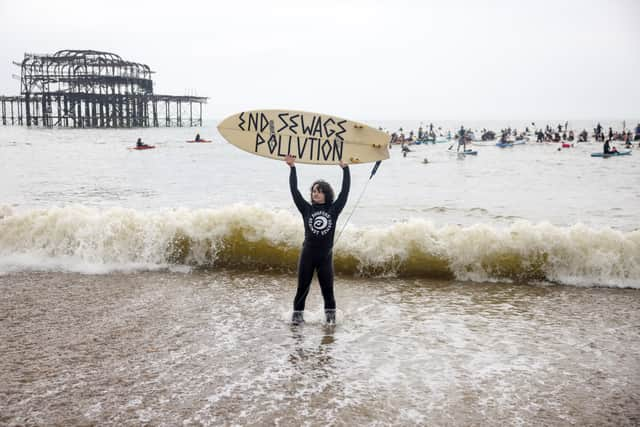

The EA report said that Anglian Water and Thames Water have “dominated serious pollution incident numbers for many years” and “Southern Water’s incident numbers have been erratic”. It added that Northumbrian Water and Severn Trent Water “had no serious pollution incidents which shows that the performance expectation can be met”.
Most of the serious pollution incidents continue to be from foul sewers and the EA is “concerned about the increase in number of serious pollution incidents from rising mains”. The report states that there were 2,174 incidents from sewerage and water supply assets, an increase from 2,026 in 2022, 1,883 in 2021 and 1,919 in 2020.
The EA said just three firms met conditions for its top four-star performance ranking.
• Severn Trent Water - 4 stars - no change from 2022 • United Utilities - 4 stars, up from 3 stars • Wessex Water - 4 stars, up from 2 stars • Northumbrian Water - 3 stars, the same as the previous year • Anglian Water - 2 stars, no change from 2022 • Southern Water - 2 stars, the same as the previous year • South West Water - 2 stars, no change • Thames Water - 2 stars, the same as the previous year • Yorkshire Water - 2 stars, down from 3 stars
The EA’s chair Alan Lovell said: "For the nation to have cleaner rivers and seas, water companies must take responsibility to understand the root cause of their problems It is promising to see some companies starting to accept their responsibilities, but it is evident that the pace of improvement continues to fall short.
"We frequently tighten standards to drive better performance and we have been clear that we expect all companies to achieve, and most critically sustain, better environmental performance. As part of this we are taking forward our biggest ever transformation in the way we regulate, recruiting up to 500 additional staff, increasing compliance checks and quadrupling the number of water company inspections by March next year."
The report comes as Ofwat, the industry regulator, is investigating all wastewater companies in England and Wales over sewage spills, saying it showed “how concerned we are about the sector’s environmental performance”. It also comes amid the fears of Thames Water collapsing after the warm firm announced it could run out of money by next June.
In financial results for the year to 31 March, Thames Water revealed that it has £1.8 billion of liquidity, enough to fund its operations until the end of May next year, but that it needs new investment. In the same report it also revealed a catalogue of missed targets and under-performance. On supply interruptions, which looks at the length of time water is not available per number of properties served, there were 16 minutes 56 seconds in 2023/24, a 15% reduction on the previous year. Chris Weston, chief executive officer at Thames Water, admitted that the firm’s “performance in pollutions and sewage discharges is not where it should be or where we want it to be”, adding that “the number of reportable pollutions increased during the year to 350 from 331.”