
Power outage in Spain and Portugal caused by poor grid planning, official report finds

Six weeks after a massive blackout disrupted Spain and Portugal, Spanish authorities have confirmed the outage was caused by “technical and planning errors” - not a cyber attack - that triggered cascading failures across the national grid.
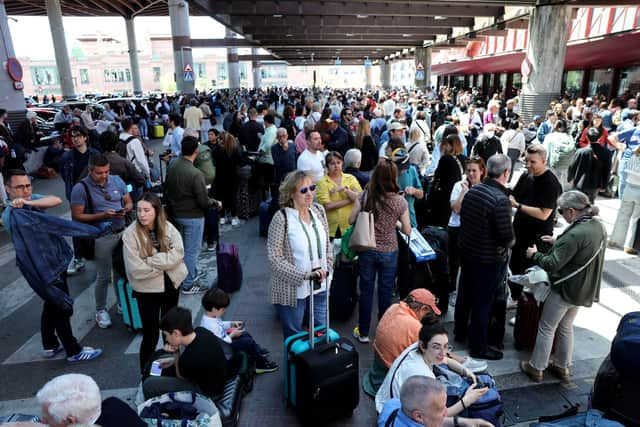
The April 28 power cut, which began shortly after 12.30pm, plunged much of the Iberian Peninsula into darkness, affecting mobile networks, transport, internet services and businesses across both countries. According to Spain’s ecological transition minister Sara Aagesen, the problem began with “small grid failures concentrated in the south of Spain,” which then triggered a rapid chain reaction.
“In just five seconds, Spain lost 15 gigawatts of electricity — about 60% of its supply,” Aagesen told a press conference. Portugal, which shares its power grid with Spain, was also affected. Only the islands of both countries were spared.
Power was gradually restored throughout the day and fully back online by early the next morning.
According to the government’s official report, which included assessments from Spain’s national security agencies, there was “no indication” of a cyber attack. “The poor planning by operators of the grid who did not find a replacement for one power plant that was supposed to help balance power fluctuations” was among the causes identified, the minister said.

Spain’s grid operator Red Electrica had previously narrowed the fault to two substations in southern Spain that failed nearly simultaneously. But in the weeks since the blackout, uncertainty and speculation swirled about the reliability of Spain’s power system - particularly its growing reliance on renewable energy.
Spain generated nearly 57% of its electricity in 2024 from renewables, and Prime Minister Pedro Sánchez has set a goal of 81% by 2030. He rejected claims that the outage reflected a flaw in green energy policy, saying his government would not “deviate a single millimetre” from its climate targets.
“We asked for patience, and we now have answers,” said Aagesen. “What we experienced was a failure of planning, not a failure of the clean energy transition.”