
Black Friday used to last a day. Then Amazon changed how Britain shops

Black Friday is still weeks away, yet the sales have already begun. From Amazon Prime Day to month-long promotions, this is how one imported US shopping event became a near-constant fixture of the British retail calendar.
Black Friday falls on November 27 this year, which might suggest there is still plenty of time before Britain’s annual bout of retail discounting begins.


Not quite.
Amazon’s Prime Big Deal Days starts on October 6, offering two days of discounts across everything from televisions and toys to beauty products and kitchen gadgets. It comes barely three months after Amazon’s four-day Prime Day event in June, while Very is already advertising a Black Friday period running from November 2 until December 4.
So a sale that was once associated with a single Friday now stretches, in one form or another, across much of the final quarter of the year.
How did we get here?
Black Friday is, of course, an American import, traditionally held on the day after Thanksgiving. Britain does not celebrate Thanksgiving, but we were apparently happy enough to adopt the shopping frenzy attached to it.

The term itself is generally traced back to Philadelphia, where police used it in the 1950s and 1960s to describe the traffic, crowds and disruption that followed Thanksgiving. The more familiar story that it referred to retailers moving from “the red” into “the black” came later.
Amazon played a major role in bringing the event into the British mainstream.
Read more: How to check if your Amazon deal is really the best price ahead of Prime Big Day Deal Days
In 2010 it launched a five-day “Black Friday Deals Week” in the UK, with eye-catching offers including £1 albums from Take That and Susan Boyle alongside its limited-time Lightning Deals.
Even then, Black Friday was already proving rather flexible about the whole Friday part.
The high street soon followed. Asda, then owned by Walmart, brought the more recognisably American version into its UK stores in 2013, with shoppers scrambling for discounted televisions and plenty of footage of the resulting chaos.
By 2014 the event had become firmly established. Tesco, Currys, Argos, John Lewis and others joined in, websites struggled under the demand and police were called to some stores.
One shopper emerging from a Sainsbury’s with a discounted Dyson provided a line that still feels wonderfully appropriate: “I got a Dyson but I don’t even know if I want it.”
The following year Asda stepped back from Black Friday, saying its customers did not want to be “held hostage” to a day or two of sales.
The rest of the retail industry took a different view.
Amazon then made what was arguably the bigger breakthrough.
In July 2015, to celebrate its 20th birthday, it invented Prime Day. There was no existing shopping tradition behind it, no public holiday, no seasonal logic beyond the fact that Amazon had decided July would be a good time to hold a sale.
The first Prime Day lasted 24 hours and was promoted as offering “more deals than Black Friday”. Amazon later said customers ordered 34.4 million products across participating countries and that sales exceeded the previous Black Friday.
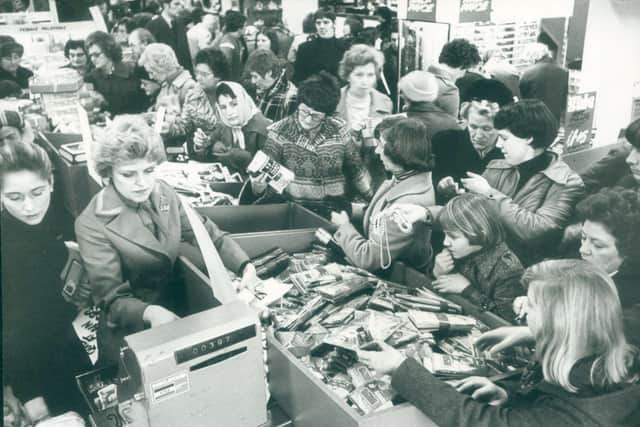
That success changed the game.
Prime Day showed that a major retailer did not need an established shopping occasion. Give the event a name, promote it heavily, attach a deadline and shoppers would respond.
Since then, Prime Day has expanded. This year’s summer event lasted four days, while Amazon has also created a second autumn event, originally called the Prime Early Access Sale and now known as Prime Big Deal Days.
And the rest of retail has embraced the same logic.
We now have early Black Friday offers, Black Friday weeks, extended Black Friday events, Cyber Monday, members-only sales, flash events and branded promotions from almost every major retailer and consumer brand.
Then come Christmas offers, Boxing Day and January sales.
The result is that the traditional retail calendar has all but disappeared into one long sequence of supposedly exceptional buying opportunities. There is nothing wrong with retailers competing on price, and some of these events undoubtedly produce genuine bargains, but the difficulty comes when something presented as exceptional becomes an almost permanent feature of shopping.
A sale only really works if shoppers believe they are being offered something unusual and time-limited. Stretch that idea across weeks and months, with one event beginning almost as soon as the previous one ends, and inevitably some of that urgency begins to wear thin.
Amazon has been one of the biggest forces behind the change, first helping to establish Black Friday in Britain and then demonstrating with Prime Day that retailers did not need to wait for an existing shopping occasion at all. The rest of the industry has followed enthusiastically, creating a calendar in which there always seems to be another supposedly unmissable event just around the corner.
Black Friday itself is still seven weeks away, yet the sales season is already well under way and will roll on through Christmas, Boxing Day and into January. By then, after months of crossed-out prices, countdown clocks and limited-time offers, many shoppers may reasonably wonder what the normal price of anything actually is.
And somewhere in the middle of it all, inevitably, there will be an electric toothbrush that is 60% off.