
Garmin Index S2 smart scales: I compared them with professional gym equipment – and was amazed by the results


This article contains affiliate links. We may earn a small commission on items purchased through this article, but that does not affect our editorial judgement.
Can bathroom scales really measure body fat, muscle mass and hydration accurately? I put Garmin's Index S2 to the test against professional Technogym equipment at my gym, with some surprising results.
There was a time when stepping on the bathroom scales was a fairly straightforward affair. You stood on them, discovered how much you weighed and either smiled or wished you hadn't bothered.
These days, even weighing yourself can be a high-tech experience.
The Garmin Index S2 smart scales don't just tell you your weight. They provide a much more detailed picture of your body composition, with six different measurements to help you keep track of your health and fitness.
As someone who already uses Garmin devices to track everything from my running and golf to sleep and fitness levels, I was keen to see what the scales could add to the mix.
And there was one question I particularly wanted answering. Just how accurate are they? Fortunately, I had a way of putting them to the test.
What are the Garmin Index S2 smart scales?
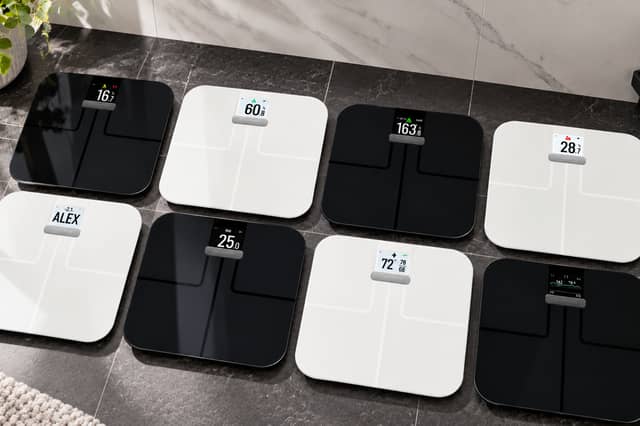
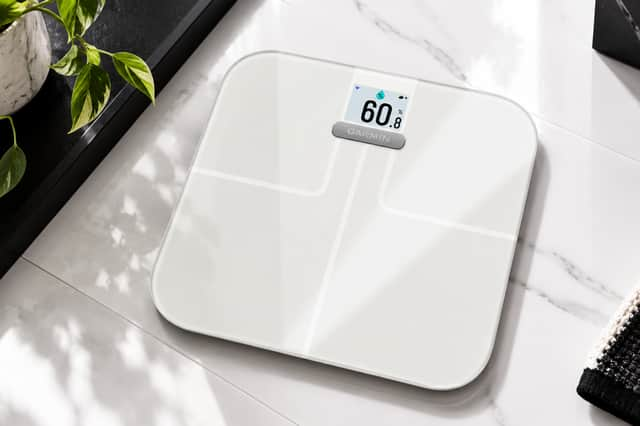
Available in black or white, the Index S2 scales are a stylish addition to any bathroom, with a sleek, glossy, mirror-like finish that gives them a distinctly luxurious feel.
But beneath that beautiful, minimalist design lies some seriously smart technology.
As well as weight and BMI, the scales provide four additional body composition measurements: body fat percentage, skeletal muscle mass, bone mass and body water percentage.
They use bioelectrical impedance analysis (BIA), which sends a tiny electrical current through your body to estimate its composition...no pain involved!
The scales connect to the free Garmin Connect app via Wi-Fi, automatically syncing your results so you can monitor changes over time.
You'll need the app to set them up and access all their features, but you don't need a Garmin watch or any other Garmin device. There's also a colour display showing your measurements, along with a handy 30-day weight trend graph.
Garmin claims nine months of battery life, but some reviewers report a year or more. It's too early for me to judge, but I'll be interested to see how long mine lasts.
What I liked about the Garmin Index S2
The biggest surprise for me was just how closely the readings matched those from the Technogym body composition equipment at my gym.
Unlike the Garmin scales, which take measurements through your feet, the Technogym equipment also has handles, allowing it to assess electrical impedance across more of the body.
I decided to compare the six measurements from both devices, taking the readings within hours of each other on the same day. And I have to admit, I was genuinely surprised by the results.
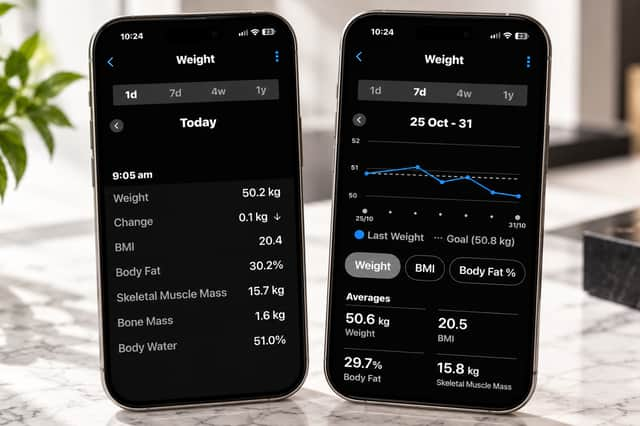
My Garmin scales recorded my weight as 50.2kg. Technogym measured 50.3kg – a difference of just 100g.
Both gave me an identical BMI of 20.4, while my body fat percentage was exactly the same at 30.2%.
Skeletal muscle mass was another perfect match, with both recording 15.7kg.
My Garmin scales estimated my bone mass at 1.6kg, compared with Technogym's reported bone mineral content of 1.59kg.
Finally, my body water was 51% on Garmin and 51.1% on Technogym.
Of course, matching results don't necessarily mean either machine is clinically accurate. Body composition measurements are estimates, and readings can vary depending on hydration, exercise and other factors. Nevertheless, seeing such close agreement between my bathroom scales and the equipment at my gym was certainly reassuring.
Another big plus is how effortlessly the scales fit into the Garmin ecosystem.
I already use Garmin Connect to monitor my activity, sleep and fitness, so having my weight and body composition measurements alongside everything else makes perfect sense.
There's no need to manually enter figures or remember to record them. Step on the scales and the information syncs automatically.
I also really like the 30-day weight trend graph, which helps put those inevitable daily fluctuations into perspective.
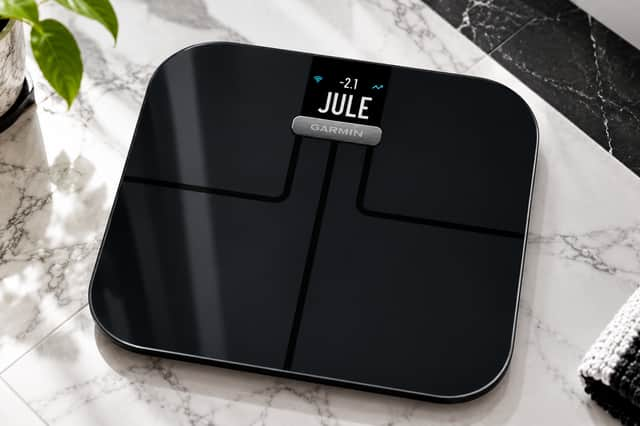
Another handy feature is that the scales support up to 16 different users, so the whole family can keep track of their own measurements. The scales automatically recognise who's standing on them (you can enter uop to four characters for each name) and if they get it wrong, switching between profiles is as simple as tapping the scales. Each person's results are then synced to their own Garmin Connect account.
What I didn't like about the Garmin Index S2
There's very little to dislike about the scales themselves. They usually cost £129.99 - making them more expensive than an ordinary set of bathroom scales - although they’re currently on sale at Boots at £110.99.
And while the body composition figures are interesting, it's important not to become too fixated on individual readings.
Weight, hydration and body composition estimates can fluctuate from day to day, so they're most useful for monitoring longer-term trends.
It's also worth remembering that the bone mass figure isn't a measurement of bone density and shouldn't be used to assess bone health.
Finally, while Garmin Connect is free, needing an app for the initial setup might not appeal to everyone.
Verdict
If all you want to know is how much you weigh, these scales are probably more sophisticated than you need.
But if you're interested in fitness, body composition and monitoring changes over time, there's plenty to like.
They're stylish, straightforward to use and particularly convenient if you're already part of the Garmin ecosystem, although you don't need to own another Garmin device to benefit from them.
For me, the biggest surprise was how closely the readings matched those from the equipment at my gym. And it's good to know I can get virtually identical results at home, without having to keep taking off my trainers and socks at the gym.
While I wouldn't claim the figures are clinically precise, the results gave me confidence that the Index S2 can provide useful insights into my body composition.
Overall, the Garmin Index S2 takes bathroom scales to another level. And for someone who loves a fitness statistic, it's one more gadget that's earned its place in my daily routine.