
I replaced our fraying rug with a £430 washable one and it feels nothing like polyester


This article contains affiliate links. We may earn a small commission on items purchased through this article, but that does not affect our editorial judgement.
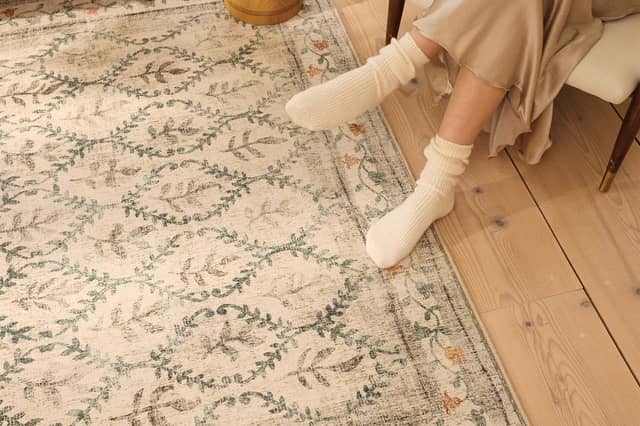
Hug Rug says its English Garden rug combines recycled materials with a luxurious feel. We tested the £430 washable design in a busy cottage for three weeks.
Our living room rug had acquired what might generously be called character. Unfortunately, much of that character consisted of frayed edges, ingrained marks and the lingering evidence of life with muddy footwear and a cat prone to hairballs.
It had been a hurried purchase made shortly after we moved into our 200-year-old stone-built cottage. Having exhausted most of our moving budget, we suddenly realised the wooden living room floor looked decidedly bare.
We already had a thick wool rug in front of the hearth, but needed something larger to bring the middle of the room together. The inexpensive rug we found online had a faded country-house appearance which suited the cottage, provided you did not inspect it too closely.
It did its job for a while, but the edges receiving the most footfall eventually began to fray. Stains resisted increasingly vigorous scrubbing and what had once looked artfully distressed began to look simply distressed.
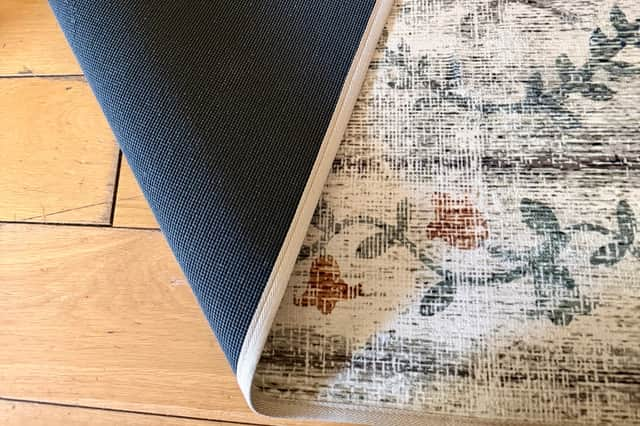
That made me curious about the English Garden Eco-Washable Rug from Hug Rug. Its maker describes it as a British-made, machine-washable rug with a soft recycled-polyester surface and non-slip natural-rubber backing.
The company says it created its first washable rug in 1970 and still makes its products at the family-run Phoenox Textiles mill in Huddersfield. That manufacturing story is appealing, but I was more interested in testing the central promise: could a rug made from recycled artificial fibres really feel natural, soft and sufficiently luxurious for a living room?
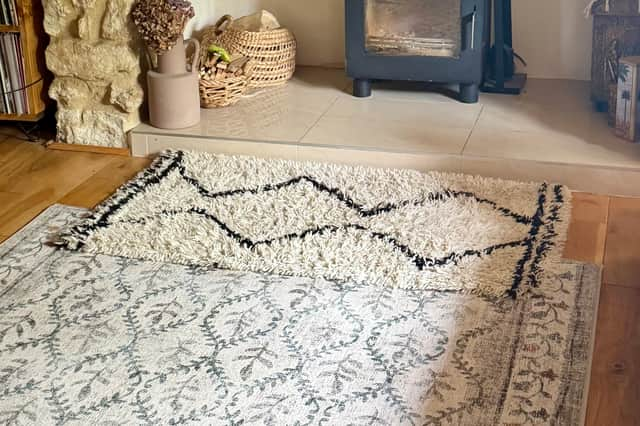
I chose the largest 185x275cm English Garden rug, currently priced at £420, to replace our old rug. Hug Rug also supplied its £24.99 Morris & Co Strawberry Thief Navy Coir Doormat for the inside of our kitchen door.
Both products were supplied free of charge by Hug Rug for review. The company had no editorial approval and there was no requirement to provide a positive verdict.
Hug Rug English Garden Eco-Washable Rug
- Price at time of writing: £432.99
- Surface: Recycled polyester
- Backing: Natural rubber
- Care: Machine washable at 30°C, subject to washing-machine capacity
- Test period: Three weeks
- Rating: 4 out of 5
- Best feature: Remarkably smooth feel and attractive country-inspired design
- Main drawback: The price and the practical difficulty of washing the largest size
What I liked about the Hug Rug English Garden Eco-Washable Rug
Both products arrived rolled together in one reassuringly weighty package. There was no discernible smell when the rug was unwrapped and, despite its journey, its corners did not curl upwards when it was laid out.
The natural-rubber backing is designed to prevent movement. Our coffee table helps to anchor the rug, so I cannot give the backing all the credit, but none of its edges have shifted or rucked up during three weeks of constant use.
The biggest surprise was its feel. I had struggled to understand how recycled polyester could deliver the natural softness claimed by the manufacturer. Those doubts disappeared as soon as I touched it.
Its surface is genuinely silky smooth, with a nap that would impress a World Snooker referee. It feels like the opposite of the slightly shiny, conspicuously synthetic material I had feared.
That low, consistent nap also makes the rug easy to maintain. We have vacuumed it regularly and it releases crumbs and dust without appearing to trap them deep within its surface.
The design has been equally successful. We deliberately chose something lighter than our previous rug because the cottage can feel dark during the winter months. The English Garden’s soft cream background brings welcome light into the room without looking stark or modern.
Its green leafy pattern, distressed woodblock effect and tiny flecks of rust and orange give it warmth. Those restrained colours also complement the natural off-white of our thick wool hearth rug instead of competing with it.
The photographs on Hug Rug’s website give an accurate impression of its colours. In our room, it strikes the right balance between making a statement and looking as though it belongs in an old stone cottage.
More importantly, it is standing up well to everyday life. Because of its position in our small living room, it is walked over constantly. The areas in front of the sofa receive repeated footfall and pressure from our feet, but the nap remains consistent.
I inspected the whole rug on my hands and knees under a bright light after three weeks. I could not find a loose thread, frayed edge or visible mark. If the cat has attempted any clandestine claw sharpening while we have been out, it has left no evidence.
The cat has provided two less subtle cleaning tests. Both incidents were removed using warm water and a very small amount of detergent, with surprisingly little scrubbing required. Once dry, I could not identify where either mark had been.
This was spot-cleaning rather than a full machine wash, so I cannot claim to have tested the headline feature completely. It does, however, suggest that the surface releases dirt far more readily than our previous rug.
What I didn't like about the Hug Rug English Garden Eco-Washable Rug
The obvious obstacle is its £420 price. That is a substantial outlay for a polyester rug, recycled or otherwise, particularly when less expensive alternatives are available from high-street and online retailers.
It cannot claim the natural fibres, hand-knotting or exotic origins associated with a Kashmiri or Afghan rug. Buyers motivated primarily by material provenance may therefore find the price difficult to reconcile.
The comparison is not entirely straightforward, however. A handmade wool rug and a washable recycled-polyester rug meet different needs. Here, the money buys a convincing premium feel alongside resistance to everyday dirt and the possibility of much easier cleaning.
The other qualification concerns washability. Hug Rug says the rug can be machine washed on a gentle 30°C cycle, but the 185x275cm version is far too large for our domestic washing machine. The company advises using a suitably large drum or visiting a launderette for bigger sizes.
That means “machine washable” does not necessarily mean you can simply pick up the largest rug and put it in the machine at home. Smaller versions should be much more manageable, but owners of the 185x275cm model need to consider the weight, transport and drying logistics of a complete wash.
Three weeks is also too short a test to reach a definitive conclusion about performance over several years. Its condition so far is exemplary, but its longer-term durability remains to be proven.
Overall verdict
The English Garden rug has changed the appearance of our living room more than I expected. Instead of being another “that’ll do” purchase, it looks deliberate and makes a statement as you enter the room.
Its pale background lifts a naturally dark cottage interior, while the distressed botanical pattern prevents it from looking too pristine or out of place. Most impressive of all is the silky, consistent surface, which immediately overcame my doubts about how a recycled-polyester rug might feel.
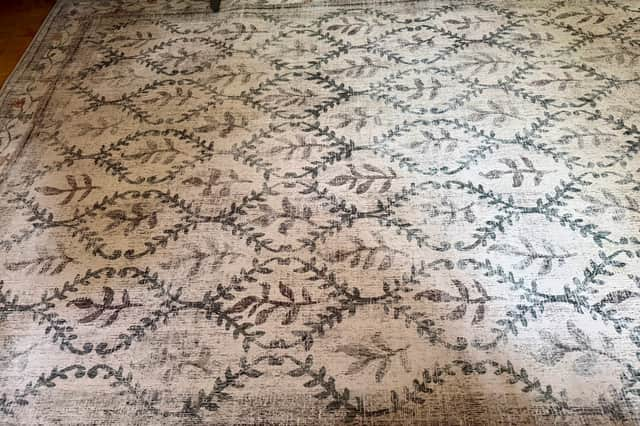
It has remained flat and stable, releases everyday dust easily and has emerged completely unmarked from two cat-related spot-cleaning tests. After constant footfall, there is no visible fraying, flattening or loose stitching.
The £420 price will understandably deter some buyers. The largest version also stretches the practical meaning of home washability because it requires a commercial-sized machine.
Even so, I would spend the money on it. A traditional luxury rug can cost two, three or four times as much, while being considerably less forgiving when confronted with mud, spills or pets. The Hug Rug offers much of the visual and tactile pleasure I would expect from a more expensive purchase, but in a format better suited to a busy home.
For smaller spaces, the lower-priced sizes should make the balance of luxury and practicality even more persuasive.
The Strawberry Thief coir doormat ⭐️⭐️⭐️⭐️
The secondary product I tested was the Morris & Co Strawberry Thief Navy Coir Doormat, measuring 45x75cm and priced at £24.99.
Unlike the rug, this is not made from recycled polyester. It is a traditional doormat made from natural coconut-husk fibres with a latex backing.
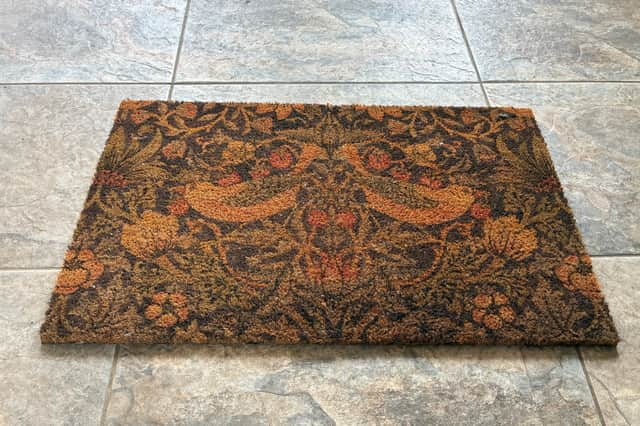
The familiar William Morris design immediately caught our attention. Its birds, foliage, and fruit appear in deep, earthy colours which create a warm focal point against the cold grey of our kitchen flagstones.
Its own substantial weight anchors it securely to the floor and we have experienced no slippage. It catches dirt effectively, although cleaning it requires the traditional approach of taking it outside for a good shake or occasional beating.
It shed a few loose coir fibres during its first week or two, but that is normal for a new natural-fibre doormat and has not caused concern.
It does not reinvent the coir mat, but that is hardly a criticism. This is a robust version of a proven design, made more attractive by one of Britain’s best-known decorative patterns.