
Olympics men's triathlon event postponed at last minute due to high levels of pollution in River Seine

The men’s Olympic triathlon has been postponed due to high pollution levels in the River Seine.
The event has been postponed just hours before it was due to start today (Tuesday 30 July). It follows a 3.30am inspection of the Seine which found that pollution levels were still too high for athletes to safely swim in.
In a statement, organisers said that the heavy rain over Paris on Friday and Saturday had compelled them to “reschedule the event for health reasons.” The men’s race has been rescheduled for 10.45am on Wednesday (31 July) following the conclusion of the women’s race, which is due to start at 8am.
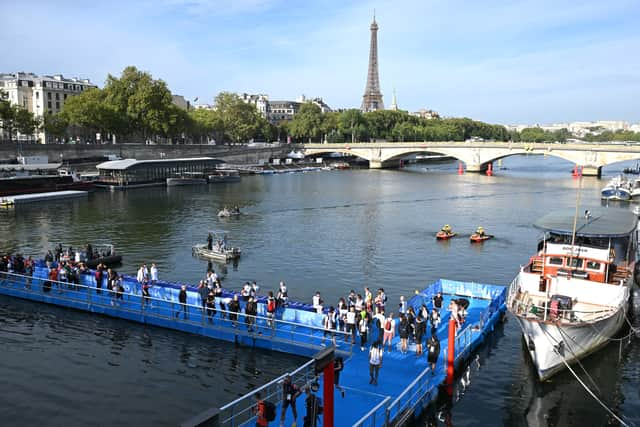

However, there is also a risk of thunder and lightning in Wednesday’s forecast, which could affect the event. The decision was taken to postpone the men’s triathlon after the 3.30am meeting and water quality test attended by Paris 2024, World Triathlon, the International Olympic Committee, Météo France, the City of Paris and the Prefecture of the Ile-de-France Region.
“Considering the latest weather information, it has been decided to schedule the men’s triathlon event on 31 July at 10h45,” the statement said, “The women’s triathlon is due to take place the same day at 8am. Both triathlons are subject to the forthcoming water tests complying with the established World Triathlon thresholds for swimming.
“The original contingency day also remains in place for August 2, for further considerations.“Paris 2024 and World Triathlon reiterate that their priority is the health of the athletes. The tests carried out in the Seine today revealed water quality levels that did not provide sufficient guarantees to allow the event to be held.”
The statement added: “Unfortunately, meteorological events beyond our control, such as the rain which fell over Paris on 26 and 27 July, can alter water quality and compel us to reschedule the event for health reasons. Despite the improvement on the water quality levels in the last hours, the readings at some points of the swim course are still above the acceptable limits.”