
Brit dad, 41, dies climbing Mount Kilimanjaro on group trip after developing severe altitude sickness

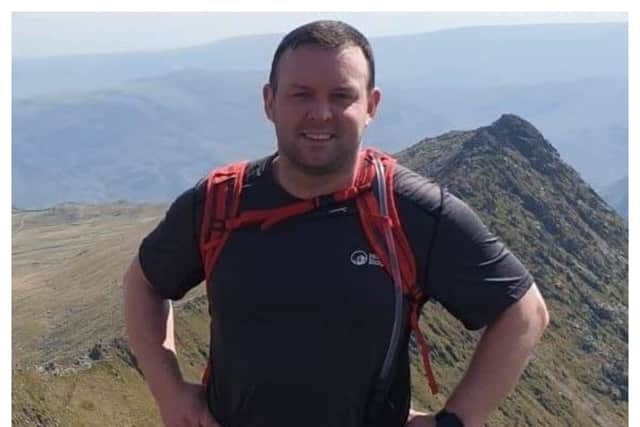
Dad-of-two Gerrard Kennedy, 41, tragically died while climbing Mount Kilimanjaro in Tanzania after developing severe altitude sickness.
Gerrard Kennedy travelled to Tanzania on February 17 last year, as part of a group trip organised by Adventure Code UK, a company which runs guided mountain hikes in the UK and overseas. But the dad-of-two, who was a ship manager at Cammell Laird Shipyard in Birkenhead on the Wirral, sadly died after he developed severe altitude sickness during the hike.
The 41-year-old was described as an "extremely fit and active" man who enjoyed running, hiking and trekking - and didn't have any known health problems. An inquest held at the Gerard Majella Courthouse in Liverpool on Friday (17 January) heard that Gerrard was among 14 people who participated in the hike.
Among the witnesses at the inquest were Thomas Code and Christopher English, owners of Adventure Code UK. The inquest heard the company used the services of Trekking Tanzania, a local firm, to guide the group on an eight-day hike of Mount Kilimanjaro.
The local firm was led by a guide called Nelson, who was said to have over a decade of experience in leading expeditions. All the guides were accredited as internationally-recognised "Wilderness First Responders", the Liverpool Echo reported.

Mount Kilimanjaro is Africa's highest peak and its summit is 5,895 metres above sea level. Given the dangers of hiking at high altitude, the group were given nightly medical checks in which readings were taken using a pulse oximeter, which measures the amount of oxygen in the blood.
Gerrard had taken the precaution of visiting his GP prior to travel and was prescribed Diamox, which helps prevent altitude sickness. The hike began on February 19 and the first couple of days of the expedition went smoothly.
On the third day, Gerrard reported having a mild headache, and that evening, his oxygen saturation reading was low, measuring just 55 per cent. However, he was given the all clear to continue by the Tanzanian guides, with Mr Code and Mr English deferring to their expertise.
On the fourth day of the hike, on February 22, Gerrard began experiencing more serious problems. According to Mr Code, what started as a slight cough turned into a "chesty rattle", which sounded like "he had a walkie talkie in his chest." He struggled to walk and was eventually carried by Nelson and the other guides.
When they eventually arrived at the camp, Gerrard had a bowl of soup and went to bed. The guides decided he was not in a fit state to continue the hike, and they told him he would be evacuated from the mountain in a helicopter the following morning.
However, during the night, his condition took a turn for the worse. In his tent, which he shared with Mr English, his breathing was shallow. He was then taken away on a stretcher for immediate evacuation from the mountain.
At 11.30pm on February 22, the rescue crew began their descent towards the treeline with Gerrard on his stretcher. At this point, he was still talking and in good spirits, but things rapidly changed as his oxygen supplies dwindled. The guides placed him in the recovery position, but by then it was too late. Gerrard died on the stretcher on the way to the safety of the treeline. Following an eight hour descent, Gerrard's body was repatriated to the UK. A post-mortem was carried out on March 11, which gave his cause of death as "high altitude illness".
He stated that although Nelson the guide was satisfied that two oxygen cylinders would be sufficient for Gerrard's descent when he became seriously ill, "that judgement call was incorrect." Mr Lewis added: "Had more oxygen been available he wouldn't have died where he did and when he did, and his death was precipitated by the ending of the oxygen supply."
The coroner suggested in his concluding remarks that it would be helpful if companies like Adventure Code UK could "have a list of questions in place" to ask local tour companies like Trekking Tanzania. Mr Lewis paid tribute to Gerrard, whose family were present in court, saying he was "clearly an impressive young man" who died too soon.