
Elon Musk reportedly took so much ketamine during Donald Trump presidential campaign it damaged his bladder

Elon Musk reportedly took such large quantities of ketamine while campaigning for Donald Trump that it caused bladder damage.
The allegations, sourced from people familiar with Musk’s inner circle, suggest the tech billionaire also used ecstasy and psychedelic mushrooms during the same period, according to claims published by The Telegraph and The New York Times.

This comes as Trump hosts a farewell press conference at the White House on Friday, describing Musk as “one of the greatest business leaders and innovators the world has ever produced”.
Musk, 53, who contributed around $288 million to Trump’s re-election campaign and served in his administration under the Department of Government Efficiency (Doge), is said to have frequently used ketamine at private gatherings both in the U.S. and abroad. Sources claim he told friends that his use of the drug during the 2024 election campaign was harming his bladder.
“People close to Musk were said to have become worried about what they saw as his erratic behaviour, emotional instability and obsession with fathering more children during the closing months of the election campaign,” reported The Times on Friday.
Photos seen by The New York Times allegedly show Musk carrying containers labelled as Adderall, a stimulant typically prescribed for ADHD. He has not publicly commented on the new allegations.
While Musk has not denied using ketamine, he previously stated it was prescribed to treat depression. In a March 2024 interview with Don Lemon, Musk said: “There are times when I have a negative chemical state in my brain, like depression, I guess. Ketamine is helpful for getting one out of a negative frame of mind.”
He added: “If you use too much ketamine, you can’t really get work done.”
In response to speculation about misuse, Musk told Lemon that he does not abuse the drug because of the demands of his work. Shortly after the interview, Musk defended his use of ketamine again on X (formerly Twitter), writing: “The reason I posted about ketamine (at some personal risk) is that I thought it might help people struggling with bouts of depression. In my opinion, it is a far better solution than being zombified by SSRIs.”
However, The Wall Street Journal and The New Yorker have previously reported concerns among Musk’s associates and executives at his companies about his use of illegal substances. Ronan Farrow wrote in 2023 that some of Musk’s closest aides were worried ketamine, along with his increasing isolation and deteriorating relationship with the press, could be fuelling chaotic and impulsive behaviour.

Musk, who holds “top secret” security clearance due to his contracts with NASA and the Pentagon through SpaceX, is said to have received advance warnings about random drug testing at the company.
Reports of Musk’s drug use resurfaced as he concluded his temporary role in Trump’s cabinet earlier this week. His departure from the Department of Government Efficiency followed months of internal clashes and public scrutiny, including concerns raised after erratic public appearances, such as waving a chainsaw on stage, and late-night posting sprees on X.
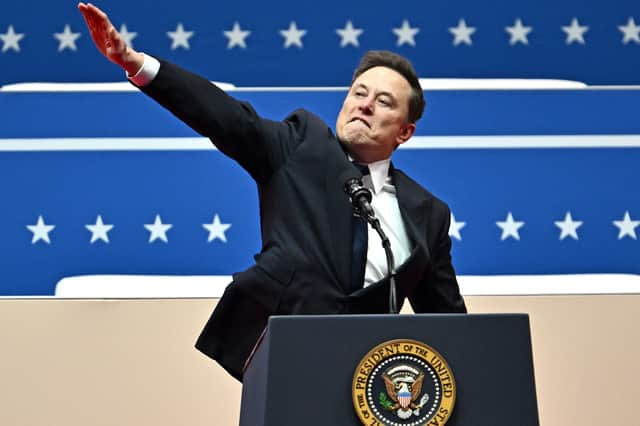
He was also accused of making a Nazi salute during his speech at Trump’s inauguration ceremony.
What is ketamine?
Ketamine was first approved as an anaesthetic in 1970, because it could make people lose consciousness without affecting the quality of their breathing. In the 2000s, researchers found that doses of ketamine that didn’t put people to sleep could rapidly reduce symptoms of depression, because, they thought the drug altered the physical circuitry of the brain.
In 2019, the FDA approved a nasal spray containing a form of ketamine called esketamine for patients with depression who hadn’t responded to other treatments. Across the US bespoke ketamine clinics offer shots and lozenges to treat a wide variety of mental-health conditions, including anxiety and PTSD.
According to the Oxford Health NHS Foundation Trust the effects of taking it long term are unknown, and there may also be unusual side-effects which occur acutely which have not yet been reported. The side effects that have been reported include feeling dissociated (mind and body feel separate), ‘ego dissolution’, dizziness, feeling a bit drunk or lightheaded, feeling tired for the rest of the day after treatment, altered perception, nausea or vomiting, anxiety, headache, tinnitus – a ringing in the ears. temporary bruising, an increase in blood pressure or a fast heart rate.