
PDSA vets reveal 12 mini miracles this Christmas
Vet charity PDSA, treats over 430,000 pets across the country each year, and many of those are emergency, life-threatening, cases. To mark an end to the year, the charity is sharing it’s very own 12 tails of Christmas, the stories of 12 pets who needed urgent care, from a degloved leg to a deadly womb infection, and some are well and truly miracles.
PDSA Vet Catherine Burke said: “Last Christmas period, over just nine days, we saw over 27,000 pets, 1,800 of those pets had emergency conditions. In this time, our teams performed over 430 surgical operations, carried out over 800 X-rays, and prescribed oral or topical medication to over 10,400 pet patients.
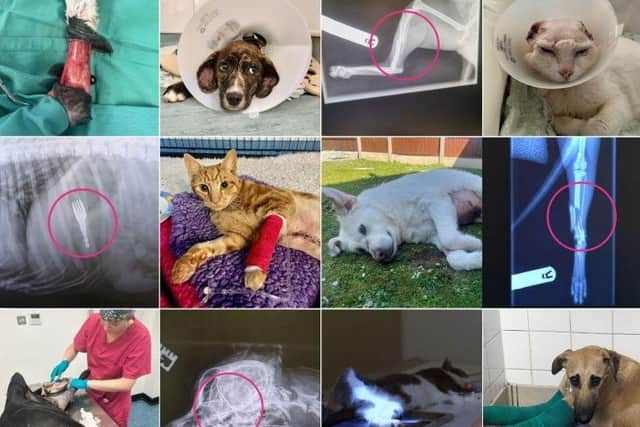

“Over this 2025 Christmas period (24 December 2025 - 2 January 2026), we expect to see over 28,000 pets.”
PDSA’s 12 Tails of Christmas
Just these 12 mini miracles had a total cost of over £13,500 to PDSA. In 2025, the charity expects to have treated over 450,000 pets and supported over 4.5 million pet owners with expert advice and information.
If you’d like to support the charity in making more miracles happen, head to www.pdsa.org.uk/miracle25
Liley Siney, 17-year-old elderly cat’s ear tips removed to fight deadly skin cancer at Bournemouth PDSA Pet Hospital
Adventurous white cat, Lily, has lived with her loving family her entire life, 17 years and counting. When her owner Ruth Siney noticed an unusual change in Lily’s ears, she became increasingly concerned.
Ruth explained: “Lily’s been very fortunate to have excellent health until the tips of her ears turned black. At first, we thought it was oil, because she spends a lot of time sprawled out underneath cars. When I tried cleaning her, I quickly realised it wasn’t that. Close-up, I could see little scabs forming, which bothered Lily; she’d scratch them and make them bleed.”
Worried by what it could be, Ruth took Lily to Bournemouth PDSA Pet Hospital, where she’s registered for low-cost vet care. There, the vet team examined her ears and diagnosed squamous cell carcinoma (SCC) – a form of skin cancer.
PDSA Vet Emma Fisher said: “SCC is a type of skin cancer most commonly caused by sunlight (UV) exposure. White cats, like Lily, as well as hairless cats or those with light-coloured skin, are particularly vulnerable to sunburn and skin cancer. Symptoms include scabby, black, crusty skin, which can later turn red, raised, and weepy, in hairless areas such as the ear tips, nose, and eyelids.”
The procedure to remove both ear tips went well, and after two months indoors recovering, she began to venture back outside again.
Tom Siddall, Sheffield PDSA Pet Hospital bring “little miracle” nine-month-old kitten back to life after road traffic accident
One-night last summer, Tom, ventured outside from his family home for his usual evening stroll, but he failed to return as normal, leaving his loving owner, Lee Siddall with a gut feeling something was wrong.
Lee said: “I felt a sudden sinking feeling when Tom wasn't home, he’d never normally disappear for that amount of time, and likes to greet me in the morning. Not long after, I found Tom collapsed outside the house. I knew he was badly hurt – he could barely move. I frantically called PDSA’s emergency line and rushed him straight there.”
At Sheffield PDSA Pet Hospital, where Tom is registered for low-cost vet treatment, the team wasted no time assessing his injuries. He was immediately given pain relief and put on fluids. Vet Nurse Team Leader, Laura Windle, said: “Tom was in a state of shock. He had blood around his mouth, was breathing much faster than normal, had some swelling under his chest and tummy area and couldn’t stand on his back legs.”
Tom was moved to the operating room for emergency surgery. There, it became clear just how life-threatening his injuries were. When the operation started, the vets saw his liver had been torn, and a hernia had caused his body wall muscles to separate from his rib. He also had a small hole in his diaphragm.
With Tom’s life at stake, the vet team worked carefully to repair his injuries during an incredibly complex and high-risk procedure. Partway through the surgery, things took a terrifying turn when Tom stopped breathing and went into cardiac arrest. Despite the odds, the skilled vet team managed to resuscitate him and restart his heart.
Fortunately, Tom made it through the rest of his surgery and was carefully moved to the feline recovery area for round-the-clock care. Tom's condition was serious, his life hung in the balance, and the vet team knew there was still a long way to go. Tom had a very tricky first night in recovery, but, the following day, the vet team were thrilled to see him standing on all four paws. Once the team felt happy with his progress, they discharged him to continue his medication and rest at home.
Less than a month after his accident, the vet team signed Tom off from further treatment and branded him a “little miracle” for surviving such a traumatic ordeal.
Cass Clorley, skin peeled from his leg after it was ‘degloved’ in a suspected trap, leg was saved at Glasgow Shamrock Street PDSA Pet Hospital
Cass’ owner, Marion Clorley couldn’t believe it when her cat came home from exploring outside missing skin from his back leg. It’s not clear what caused Cass’ injury, but Marion says: “We believe that his paw got caught in a trap as all the skin was torn off right down to the muscle.”
Miraculously, the courageous cat managed to get himself home after the ordeal and, immediately after noticing that something was wrong, Marion rushed him to a private vet where Cass was examined straight away, and the treatment needed was explained to Marion. Already worried about Cass, Marion then had the stress of affording the intricate surgery.
Marion added: “Cass needed surgery, but we couldn't afford to have it done at the private vet”. Fortunately, she discovered she’s eligible for PDSA treatment, so Cass could have his surgery.
Senior Vet Susan Hermit said: “Cass’ leg had been injured so badly, the fur and skin on his lower back leg had been completely stripped away, leaving his muscle and tendons exposed, he needed treatment as soon as possible to save the leg.”
Thankfully, Cass’ surgery went well so he was sent home to recover later that day with pain relief, antibiotics and strict instructions to rest, and he’s now fully recovered.
Dudley Porter, three-month-old pup needed emergency surgery to remove a toy from his intestines at Manchester PDSA Pet Hospital
Dudley’s owners Jamie and Carly Porter noticed he had had diarrhoea, but he was otherwise ok. However, the following day they became really worried when he was being sick and stopped eating and drinking. He’d also gone off his food entirely, seemed very tired, and was not acting his normal energetic self so they got Dudley booked in at their local PDSA.
Senior Veterinary Surgeon Honor Thompson said: “We checked Dudley over and noticed that he cried when his tummy was touched. It was clear that this area was causing him lots of pain. We could feel a firm, round swelling in this part of his belly too.
“From his examination and symptoms, we strongly suspected that Dudley had eaten something that had become stuck in his gut. The object needed to be removed as soon as possible, before it damaged his intestines and became life-threatening. Although the surgery would carry some risks, it was needed to save Dudley’s life.”
The vets found the cause of the blockage in his small intestine, the head of a soft toy. It was carefully removed through a small cut into the intestine, which was closed back up with stitches, followed by the muscle and skin layers.
Carly said: “We’re so grateful to PDSA for saving Dudley’s life; he’s a very lucky pup. We were seen so quickly, and everyone just fell in love with him. All the staff were so helpful in treating Dudley. We’re so glad he’s made a speedy recovery and is now back to his usual, happy self.”
Callie Woodward, 14-year-old cat brought back to life from a deadly womb infection at Bradford PDSA Pet Hospital
Several years ago, Callie’s owner Amy Woodward instantly knew something was wrong with her, when she became lethargic, stopped eating, and had discharge coming from her vulva. At the time, Amy contacted her local PDSA Pet Hospital and the team checked Callie over.
PDSA Vet Emma Fisher, said: “Callie’s symptoms were telltale signs of pyometra, which is a womb infection, that can be fatal if left untreated. We operated immediately to remove the infected womb; however, it was touch and go after surgery as Callie went into cardiac arrest and she stopped breathing. We performed CPR to keep blood pumping around her body and gave her oxygen. Thankfully, her heart started beating again, and she went from strength to strength in her recovery from then onwards.”
“Pyometra is common in unneutered pets. It can be a silent killer as the symptoms are sometimes hard to spot before it makes a pet dangerously unwell. Amy did the right thing in bringing Callie to us as soon as she noticed her cat was acting out-of-character.”
Without PDSA’s fast action to save Callie’s life, it could have been a very different outcome. Callie is fully recovered now and has managed to live a long and healthy life since, which may not have happened without the life-saving treatment she received when she was younger.
Eeevee Armour, nine-year-old support dog undergoes cancer surgery on Christmas Eve at Glasgow East PDSA Pet Hospital
Labrador, Eevee is more than just the family pet, so when it was discovered that she might have a cancerous lump on her leg, her owner Pam Armour wasted no time getting it treated.
Pam said: “I first noticed something was wrong with Eevee when I spotted what I thought was a bald spot on her leg”. After looking at the area, she discovered that Eevee had a marble-sized lump around her knee. Concerned for her wellbeing, Pam called Glasgow East PDSA Pet Hospital immediately.
As well as being a beloved member of Pam’s family, Eevee also provides emotional support to Pam’s 16-year-old son, Gerrard, who is autistic. Gerrard is also the one responsible for Eevee’s Pokémon-inspired name. Pam, who is unable to work due to being diagnosed with heart failure, also relies on Eevee for companionship. “She’s my shadow, she sleeps on the floor beside my bed and follows me upstairs every time I go up. It’s as if she’s making sure that I’m okay,” Pam shares.
The vet team took a sample of the cells from inside Eevee’s lump with a syringe and needle, which was then taken for testing. Once the sample had been placed under a microscope, it uncovered that Eevee’s lump contained cells that are sometimes seen with a specific type of cancerous tumour in dogs – a Mast Cell Tumour. To give Eevee the best chance of recovery, it was recommended to surgically remove the lump, so that the cancerous cells would be less likely to spread to other parts of her body.
Pam added: “Without treatment, Eevee’s illness could have spread, and she’d have eventually passed away,” she adds. Thanks to PDSA, my family and I will hopefully enjoy many more years with Eevee.” Following a few weeks of recovery, Eevee is back to being her lively self. She’s also returned to her usual duties of waiting by the window for Gerrard to get home from school.
Dougie Hamilton, a six-year-old Pyrenean Mountain Dog, is lucky to be alive after swallowing a 12cm fork whole during a family lunch, Derby PDSA Pet Hospital
When Amy Hamilton visited her sister and young nephews for Sunday lunch, she had no idea the afternoon would turn into a life-or-death emergency for her beloved dog, Dougie.
As the family sat down to eat, Dougie did what many dogs do and waited nearby, hoping for some scraps. But in a moment of mischief, he managed to wolf down a child’s fork instead, resulting in him needing emergency treatment at PDSA.
“My one-year-old nephew, Oliver, was eating in his highchair. He decided he didn’t want his dinner anymore and dropped his bowl and cutlery on the floor. Dougie was quick to clean up the leftover mashed potatoes, though I was confused when I saw him chewing; he normally just inhales food. Then my sister noticed Oliver’s fork was missing. For a few minutes, we were in denial, and both frantically tried to find it.”
Dougie was admitted for emergency surgery after x-rays revealed Dougie had swallowed the whole fork, with the full PDSA surgical team on hand. He was placed on a fluid drip, given injections of painkillers and antibiotics, and prepped for the operation to remove the fork, which measured a whopping 12cm.
Thankfully, the surgery was a success, and Dougie is back to full health after his recovery.
Smudge Arnold, 15-year-old senior cat suffers from a could be fatal condition hyperthyroidism, and requires lifelong care at Bournemouth PDSA Pet Hospital
Smudge was losing weight and peeing a lot more than usual, and her loving owner Aimee Arnold, noticed that her coat was in a bad condition, she seemed so frail, and she wasn’t acting her usual self.
Concerned Aimee took Smudge to Bournemouth PDSA Pet Hospital. During their appointment, Smudge was examined by a vet who noticed that she was slightly underweight with muscle loss over her spine and back legs. They could also feel a small lump in her neck and noticed her heart rate was quite fast.
PDSA Veterinary Surgeon Team Leader Clare Sparks explained: “We performed various tests on Smudge that day, including blood tests and a urine test. These confirmed to us that Smudge had hyperthyroidism, a condition in which the thyroid glands become enlarged and overactive. Symptoms appear slowly, so you may not notice a problem at first but left untreated over a long period, hyperthyroidism can be fatal.
“We discussed the different treatment options available for Smudge, which included daily medication or surgery. Given Smudge’s age, Aimee opted for medication to avoid the risks and stresses associated with surgery, and she was started on a liquid medication twice daily.”
“If not for PDSA, I wouldn’t have been able to afford Smudge’s treatment. If left untreated, hyperthyroidism can shorten a cat’s life and cause various health issues, so I dread to think of any cat suffering because they’ve simply not been treated for their condition. The team at PDSA were fantastic and I’m so grateful to them for helping Smudge. The support has given me so much relief and Smudge her quality of life back!”
Rocky Storey, 11-month-old Cockapoo had a lucky escape thanks to Sheffield PDSA Pet Hospital, after he swallowed a needle which embedded in the roof of his mouth
Rocky’s owner Julie Storey returned from work and noticed that Rocky was not acting like his usual self. Rocky was struggling to do normal things like swallowing and yawning, and he also kept pawing at his throat like something was irritating it.
It was then that Julie noticed a reel of cotton on the floor with a needle missing. At the Pet Hospital, Rocky was thoroughly examined and admitted for X-rays to get to the bottom of the issue of what was stuck in his throat. Under general anaesthetic, the X-rays clearly showed a sewing needle stuck somewhere in Rocky’s mouth, and the vet was able to confirm its precise location: his hard palate (the roof of his mouth).
While under general anaesthetic, the vet carefully removed the needle and noticed that Rocky’s right tonsil and his larynx (the back of his throat) were inflamed from the sharp trauma of the needle.
PDSA Veterinary Surgeon Eleftheria Giasiari explained: “Despite us removing the sharp needle from his mouth, Rocky was not out of the woods yet. We had to make sure that he wasn’t in any pain and that his wound would heal nicely without infection. Once we were happy that he was fit for discharge, we were able to send him home to his owner with some pain relief”.
Thankfully Rocky made a full recovery and is now back to his usual self.
Midnight Fowke, two-year-old cat narrowly avoided losing her leg after going missing for a few days, saved from amputation at Leeds PDSA Pet Hospital
Midnight’s loving owner, Leanne Fowke said: “We developed a special bond with Midnight after rescuing her as a kitten. Both me and my husband spent a lot of time and patience with her at first as she was really scared. It’s taken a long time, but she trusts us and is such a loving little girl.
“When she went missing, we were absolutely heartbroken. Every day and night, we were looking and calling for her, but no sign. On the fourth day, we finally found her lying down under the kitchen window. She must’ve found her way home but was limping and in so much pain. I gently picked her up and brought her inside to give her food and water - she was really hungry and thirsty.”
Lauren Brown, Veterinary Surgeon Team Leader at Leeds PDSA Pet Hospital added: “We admitted Midnight for a general anaesthetic and x-rays. These confirmed that she had broken her tibia (one of the two bones in the lower leg that connects the knee and the ankle). Her leg would require surgery or possibly amputation as the break was in three pieces. Either way, it would be a long and complicated procedure. Her fracture was repaired using a surgical plate, pin and screws, each carefully placed to build her leg back together.”
Midnight was discharged home later that same day with strict instructions for rest and Leanne was asked to continue giving her pain relief medication by mouth. Leanne made Midnight comfortable and kept a close eye on her while she was recovering.
Leanne added: “Midnight will most likely have a limp for the rest of her life, but she’s back on the mend now. If PDSA didn’t exist, we would have struggled to get the money to pay for Midnight’s treatment. I share a special bond with Midnight, and she loves to give me loads of kisses. I don’t know what I would do without her.”
Belle Gould, two-year-old cat reunited with her owners in time for last Christmas after PDSA vets removed a 10cm tinsel toy mouse tail from her stomach
During the lead-up to Christmas, Tara Gould noticed some tell-tale signs that something was wrong with her beloved two-year-old cat, Belle. Worried, Tara called PDSA for help.
She explained: “Belle is very important to our family; we've had her since she was a tiny kitten. She’s very attached to her toy fish and loves nothing more than a tummy tickle; she’ll drop to the floor in front of you so that you stop to give her one. We realised something was wrong when she kept being sick and wouldn't eat.
Jessica Mills, Veterinary Surgeon at Portsmouth PDSA Pet Hospital, said: “On examination, Belle was bright and wasn’t dehydrated. However, we could tell her tummy was uncomfortable, which made us concerned she could have a foreign body or a blockage, so we admitted her for an X-ray and ultrasound. We could see an object in her small intestines on X-ray, so we discussed it with Tara and Belle was prepared for surgery so we could remove whatever was causing her issues.”
During surgery the PDSA vet team carefully removed a 10cm object that turned out to be a tinsel tail from a toy mouse. Thankfully, her operation went well, and she went home to continue her recovery and pain relief later that day.
Tara continued: “Belle had chewed off and swallowed the tinsel tail from a Christmassy mouse toy. I urge all owners to supervise their pets when playing with toys and check them for loose parts or parts they can chew off to prevent emergency surgery like Belle had. Belle's treatment from PDSA was top-class. They acted fast and saved her life. Without them, we would’ve had to get into debt to afford the cost of her emergency surgery because there was no way we were going to let Belle die. I can't thank the team enough for what they did to save her. They kept a part of our hearts alive that day, and we’re truly grateful for that.”
Munchie Maidment, two-year-old Whippet smashes broken both front legs trying to jump a 7ft fence, surgically repaired at Bournemouth PDSA Pet Hospital
Shannon owns two Whippets who are the best of friends, Munchie and Dash, and they are both adored by Shannon's family. One day when Shannon’s mum was looking after Munchie and Dash, Munchie tried and failed to jump her 7ft fence in the garden and was in obvious pain.
Paul Cossey, Veterinary Surgeon at Bournemouth Pet Hospital said: “We examined him thoroughly and found that both of his front legs were fractured but needed X-rays to see exactly where the breaks were. The X-rays confirmed that he had fractured both long bones above the wrist area in his front legs.
“We applied temporary splints to stabilise both legs. His right leg was also an open fracture, which is where the broken bone protrudes through the skin. We gave him strong pain relief to make him more comfortable and monitored him closely overnight.
Munchies fractures were both surgically repaired, using plates and screws, which were implanted into his legs. Thankfully, the surgery was a success, but Munchie wasn’t out of the woods yet. He still needed a lot of care at home, including strict cage rest for six weeks to let his bones heal properly.
Shannon said: “By the end of week one, he was comfortable walking outside for toilet breaks and spent the rest of the time peacefully resting in his cage. Soon after, he did begin walking more confidently on his legs but still needed plenty of rest to heal his bones.”
“PDSA is a great charity that works hard keeping people and pets together. The care they give animals is outstanding. I was in such a tough position financially, and I didn’t know what to do or if anyone could help me. When I went to my local PDSA, they were so helpful and understanding, so I knew Munchie was in safe hands. I’m so thankful for the treatment he received.”
Munchie has made a great recovery and is back to enjoying playing with his brother Dash.
If you’d like to support PDSA in making more miracles happen for the pets that need their care, head to www.pdsa.org.uk/miracle25