
Influencer Amine Mojito who pretended to inject people on the street in syringe prank videos given prison sentence

An influencer has been handed a jail sentence after posting multiple videos online where he pretended to inject people with a syringe.
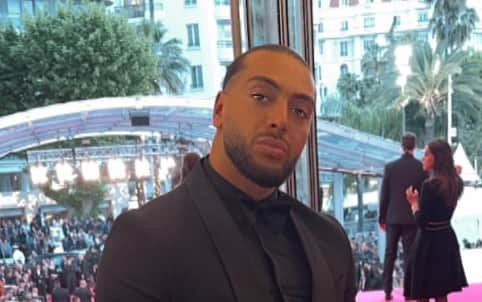
Amine Mojito, whose real name is Ilan M, was given a 12 month prison sentence after posting multiple syringe prank videos on social media.
The Frenchman viral for the videos, on which he showed himself pretending to inject bystanders with an empty syringe on the streets of Paris. The clips were posted just a few days before the country’s Fête de la Musique (World Music Day) in June, when there were unfounded rumours of attacks involving needles at festivals and student parties.
The 27-year-old was before The Paris Criminal Court on Friday (October 3), and there he was convicted of “violence with a weapon not resulting in work incapacity” and was handed his sentence. Six months shall be served in custody, and the rest suspended. Mojito was also fined €1,500 (£1,116) and prohibited from possessing or carrying a gun for three years.
Prosecutors initially demanded a more severe sentence, 15 months in electronic monitoring for five years, claiming that Mojito’s so-called knowingly aggravated public outrage in an otherwise volatile context.
The prosecutor's office also confirmed that no actual injection took place, as the young man had kept the syringe cap on. But one prosecutor described Mojito as a “public menace,” and said that even though the syringes were empty the fear they created was real.

Several victims testified to experiencing genuine panic, with one saying that the experience felt like a nightmare given ongoing public health anxieties at the time.
The videos showed a masked Mojito approaching passersby in the street or in public gardens, supposedly pricking them by surprise with a syringe , and then even sometimes pretending to chase them. They were uploaded to social media with the caption "The Mad Pricker”.
Mojito spoke in court and defended himself by claiming the videos were never intended to cause any distress or harm, and also that he was only copying what he had seen elsewhere online. “I had had the very bad idea of performing these tricks doing mimicry of what I had seen on the internet, in Spain [and] in Portugal,” he told the court, as published in local publication Libération.
“I didn’t think it could hurt people. That was my mistake, I didn’t think of others, I thought of myself.” He went on to say that he had performed the stunt in an attempt to revive his internet career, after having experienced, in his own words, a brief period of being an influencer in teen life.
He also explained that he had been "in his own world" and "didn't know anything", but also claimed he told all of the people he approached that what he had done was “a joke” and not real. The court, however, viewed his videos as having contributed, intentionally or not, to the climate of fear that was in France at the time.
The defendant's lawyer welcomed a decision that "brings the proceedings back into better proportions after the initial media frenzy." She continued: "On the other hand, this case highlights the limitations of current criminal procedure, in the face of new forms of offences committed in the digital age."