
Why is everyone so upset about Liam Payne’s death? Parasocial grief explained


NationalWorld’s Associate Editor Marina Licht speaks to chartered psychologist and wellbeing expert Dr Mark Rackley about how to navigate grief at the loss of a celebrity or public figure.
At some point in one’s life, the impact of a celebrity or public figure’s death stops you in your tracks. I was genuinely shocked and still am at the tragic passing of Liam Payne at the age of 31 but without question, the death of Princess Diana on 31 August 1997, impacted my life at the time because I had grown up with her constantly being there.
When I saw the grief that everybody is experiencing at LIam Payne’s death, (one only has to look at TikTok to witness this and the memorials that have taken place worldwide), I wanted to speak to an expert about the impact of grief when you don’t know the person, and reached out to Dr Mark Rackley who kindly answered my questions.
Is parasocial grief the term that is used when you experience grief at the loss of a celebrity/public figure?
Yes, the term is parasocial grief. This is when we have a one-sided relationship with a public figure (a celebrity, sportsperson, writer) and we are emotionally invested in that relationship. We form an emotional bond with the celebrity in question and follow their life closely through the media. This serves to strengthen the emotional bond as we feel we 'know' them as we get to see aspects of their life on a personal level.
Why do people grieve when it comes to a celebrity death? Is it because they feel they know them/have grown up with them?
Fundamentally it is an important relationship that the person has. Just because they do not personally know the person does not matter, they form the bond to them through the music, films, TV shows that the person is involved with. In some cases, yes, they will have grown up with the person and have strong memories attached to them over the years. They can also have powerful associations with the person when their music got them through difficult times and see them as a form of comfort, just as a friend would provide.
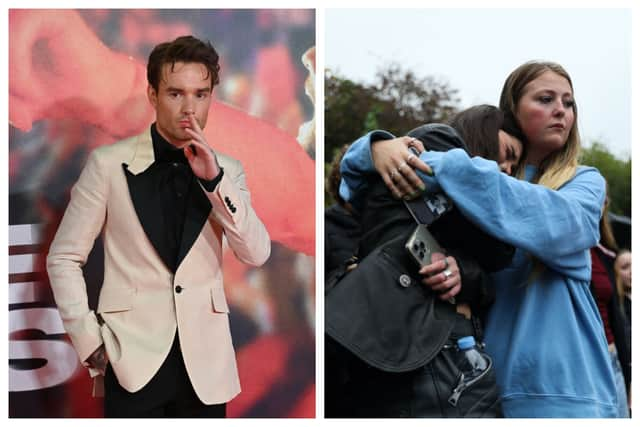
When it comes to Liam Payne, is it because it was a shock, he was so young, part of one of the biggest boy bands, or all of those reasons?
Liam was a 'normal' teenager, went on the X Factor and ended up in the biggest boy band in the world. He was relatable to lots of teenagers. His death was shocking as it was not expected, so yes, it was an untimely and also shocking death as he died from a traumatic fall. We have an unconscious hope that we will live long healthy lives and get to live until old age. Sadly this reality is not the case and when someone dies young, it feels unjust and unfair that they did not get to live a long life and have died too soon.
What advice would you give someone who is grieving over Liam Payne?
Please let yourself feel what you are feeling, it is valid and real. Grief can be confusing and overwhelming, so expect that you are going to feel that. Please ensure that you do not isolate yourself, talk to people, get support and give yourself time. Grief is a process and can't be rushed, you need time to adjust to this new normal and integrate the loss into your life.
Could they possibly be feeling the same amount as grief or more so than if a relative had died?
Maybe, it all depends how close they were to the relative in question. The key fact is the emotional bond that they had with the person. We can have blood relatives and not have strong emotional bonds with them, in fact they can be weak and we do not feel close to them.

Practically, how should they deal with grief? Does grief ever stop?
There is a right and a wrong way to deal with grief. The wrong way is to avoid dealing with the reality of what is happening, pretend that life has not changed, repress the feelings and try to keep calm and carry on. The right way is to acknowledge the loss, respect your feelings, express them and let others support you. Grief is a process, it is messy, unpredictable and not linear in how it behaves. So we never 'get over' the loss, we learn to integrate the loss into our life and live differently. Grief does not stop, it changes and moves in intensity.
There are some celebrity deaths that forever impact someone’s life, for example Princess Diana. Would you agree with this and why is this?
Yes, Princess Diana was a major figure and relationship in people's lives. People deeply cared about her and she was loved, respected and valued. She was the 'people's princess' as she was relatable and showed her humanity in dealing with people. She was also treated badly by her family and the press and this just made people more protective of her. Her death was again such a tragic and untimely death which threw people into shock and intense grief. Diana was iconic and this is why her legacy is so great.
What would you say to someone who is being told to pull themselves together over Liam Payne and are being told they are stupid as they didn’t know them?
Telling someone to 'pull themselves together,' when they are going through a grief reaction is disrespectful, unhelpful and unnecessary. The feelings that the person has are valid, even if someone else does not feel the same way. Be mindful of the feelings of the person and be available for them, remember this is about them and not you.
What are your top tips when it comes to navigating grief?
Firstly, acknowledge that grief is what is happening and that the loss is real.
You may not want to feel the negative feelings associated with grief, but that will only make matters worse as they will not go away and will only linger. There is no shame or weakness in crying, feeling overwhelmed and lost, accept that. Trying to go it alone with grief is not a good idea as the feelings can be too intense to deal with by yourself. Get support from family and friends and maybe see a grief counsellor.
Grief takes time, you cannot rush it, speed it up or predict when you will have a wave of it. Take your time with it and lean into it. It does pass and life will go on.
Chartered psychologist Dr Mark Rackley has a mental health podcast that covers a wide range of topics. Including a specific episode on grief (episode 24).