
Who was Ernest Shackleton? Princess Anne visits South Georgia to honour Antarctic explorer

Princess Anne is visiting South Georgia to honour Sir Ernest Shackleton, the Antarctic explorer behind one of history’s most remarkable survival stories.
The Princess Royal is visiting one of the most remote places on Earth to commemorate legendary Antarctic explorer Sir Ernest Shackleton and see work being carried out to protect South Georgia.
Anne, who is Patron of the South Georgia Heritage Trust (SGHT), is travelling to the South Atlantic with her husband Vice Admiral Sir Tim Laurence.
A major part of the visit will focus on Shackleton, whose extraordinary attempts to explore Antarctica became one of the most famous survival stories in history.
The princess will unveil a memorial in his honour and officially open the restored Stromness Managers’ Villa, close to the site connected with the dramatic final stages of Shackleton’s escape from Antarctica.
She will also visit Possession Bay, where Captain James Cook made the first recorded landing on South Georgia in 1775.
The trip begins in the Falkland Islands, where Anne and Sir Tim will meet members of the local community and visit Cape Pembroke Lighthouse, Tussac House and the National Sports Complex.
They are also due to attend a reception at Government House in Stanley.
In South Georgia, the princess will see conservation work carried out by the South Georgia Heritage Trust and meet British Antarctic Survey staff and representatives of the local government.
Here is the story of Shackleton, his doomed ship Endurance and one of the most remarkable expeditions of the heroic age of Antarctic exploration.
Who was Antarctic explorer Ernest Shackleton?
Ernest Shackleton was an Antarctic explorer who led three British expeditions to the Antarctic.
He was born in County Kildare, Ireland, on 15 February 1874 and at the age of 13, enrolled at Dulwich College in London. At 16, he left school and joined the Merchant Navy.
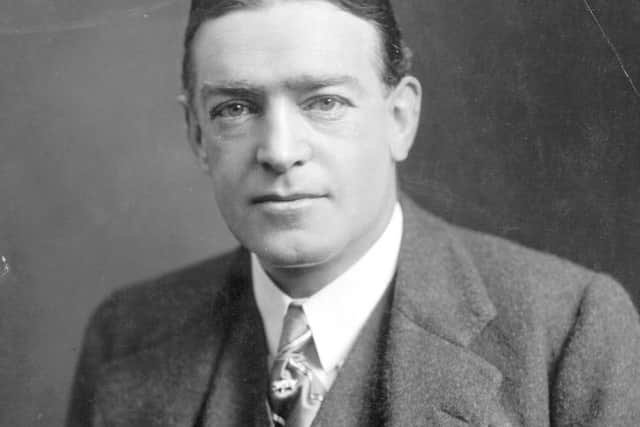

In 1900, he met the army lieutenant Cedric Longstaff, whose father was Llewellyn W Longstaff, who was the main backer of the National Antarctic Expedition which was being organised in London. Using his friendship with the lieutenant, Shackleton was able to obtain an interview with Llewellyn Longstaff, who recommended him to Sir Clements Markham, the expedition’s leader.
The British National Antarctic Expedition, known as the Discovery expedition, departed for the Antarctic in the summer of 1901.
In March 1907, Shackleton set up his own expedition which he organised himself. Known as the Nimrod expedition, it would be the first of three successful Antarctic expeditions led by Shackleton.
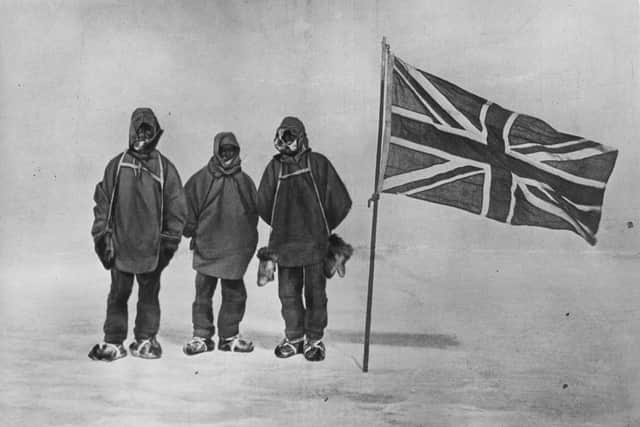
Outside of his expeditions, Shackleton married Emily Dorman on 9 April 1904, with whom he had three children, named Raymond, Cecily and Edward.
Shackleton had planned a fourth expedition where he planned to circumnavigate the Antarctic continent, however he passed away on 5 January 1922 from a fatal heart attack off South Georgia.
What happened to the Endurance ship and the crew?
In August 1914, under the encouragement of Winston Churchill, Shackleton and his crew set out to achieve the first overland crossing of the Antarctic continent.
After the expedition left the UK in August 1914, it departed from South George for the Weddell Sea on 5 December.
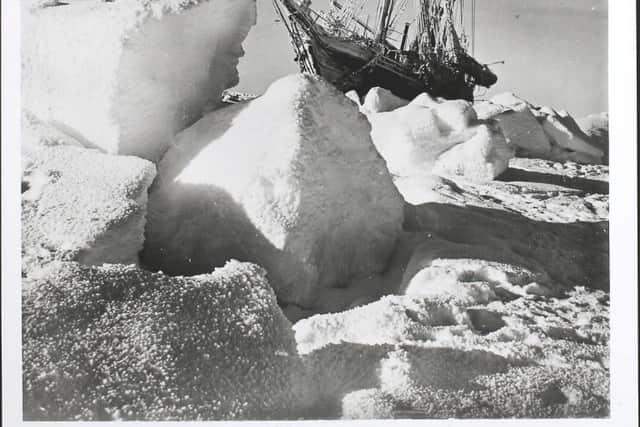
However, in the Weddell Sea, Endurance never reached land and instead found itself trapped in the dense ice on 18 January 1915. After remaining on the ship for a number of months, the 28 men on board were eventually left with no choice but to abandon the ship on 27 October 1915.
The crew set up a makeshift camp on the ice, and on 21 November 1915 the ship finally succumbed to the waters. Captain Frank Worsley recorded the coordinates of the ship’s location in his diary when it sank, which were 68°39’ 30”S, 52°26’30”W.
After spending months in makeshift camps on the floating ice, the party were able to reach the uninhabited, and inhospitable, Elephant Island using the lifeboats. Here they were able to survive by eating seals and penguins, and using the upturned lifeboats as shelter.
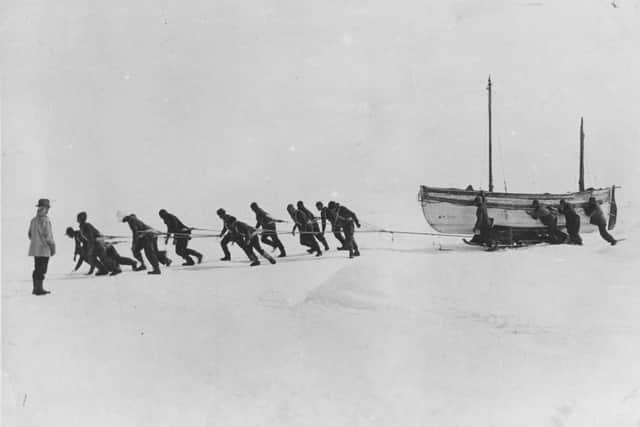
With the knowledge that no-one would be coming to Elephant Island to rescue them, Shackleton and Captain Worsley led a small group of men to South Georgia in one of the boats, where there was a whaling station.
Shackleton and two others embarked on an incredible journey across uncharted mountains and glaciers in order to reach the Norwegian whalers.
Initial missions to rescue the remaining crew at Elephant Island were unsuccessful due to the thick ice, however, on 30 August 1916, the fourth rescue attempt was successful and the party was taken to safety.
All of the crew members survived.
What was the Endurance22 expedition?
The search, called the Edurance22 expedition, set sail on 5 February, one month after the 100th anniversary of Shackleton’s death. The purpose of the expedition was to find the lost ship which sank during Shackleton’s quest to Antarctica in 1915.
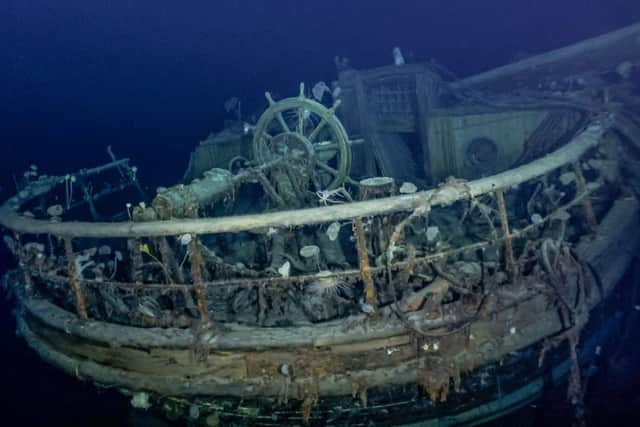
The expedition’s director of exploration, Mensun Bound, said footage of Endurance showed it to be intact and “by far the finest wooden shipwreck” he has seen.
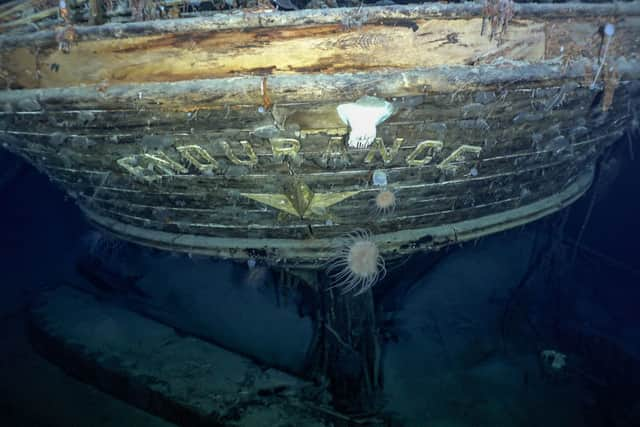
Bound said: “We are overwhelmed by our good fortune in having located and captured images of Endurance.
“It is upright, well proud of the seabed, intact, and in a brilliant state of preservation. You can even see ‘Endurance’ arced across the stern, directly below the taffrail.
“This is a milestone in polar history.”
Dr John Shears, the expedition leader, said his team, which was accompanied by historian Dan Snow, had made “polar history” by completing what he called “the world’s most challenging shipwreck search”.
He said: “In addition, we have undertaken important scientific research in a part of the world that directly affects the global climate and environment.
“We have also conducted an unprecedented educational outreach programme, with live broadcasting from on board, allowing new generations from around the world to engage with Endurance22 and become inspired by the amazing stories of polar exploration, and what human beings can achieve and the obstacles they can overcome when they work together.”
Dan Snow said on Twitter: “Endurance has been found. Discovered at 3,000 metres on 5 March 2022, 100 years to the day since Shackleton was buried.
“After weeks of searching Endurance was found within the search box conceived by Mensun Bound, only just over four miles south of the location at which its captain Frank Worsley calculated it had sunk. The entire team aboard #Endurance22 are happy and a little exhausted!
“Nothing was touched on the wreck. Nothing retrieved. It was surveyed using the latest tools and its position confirmed. It is protected by the Antarctic Treaty. Nor did we wish to tamper with it.”
He said the wreck is “coherent” and in an “astonishing state of preservation”.
Where was the ship found?
For more than a century, Endurance remained lost beneath the Weddell Sea.
The Endurance22 expedition set out in February 2022 to locate the wreck, shortly after the 100th anniversary of Shackleton’s death.
It was finally discovered on March 5, 2022, 100 years to the day after Shackleton was buried on South Georgia.
The wreck was found at a depth of 3,008 metres, around four miles south of the position recorded by Endurance captain Frank Worsley when the ship sank.
Images revealed the vessel standing upright on the seabed in a remarkable state of preservation, with the name “Endurance” still clearly visible across its stern.
Mensun Bound, the expedition’s director of exploration, described it as “by far the finest wooden shipwreck” he had ever seen.
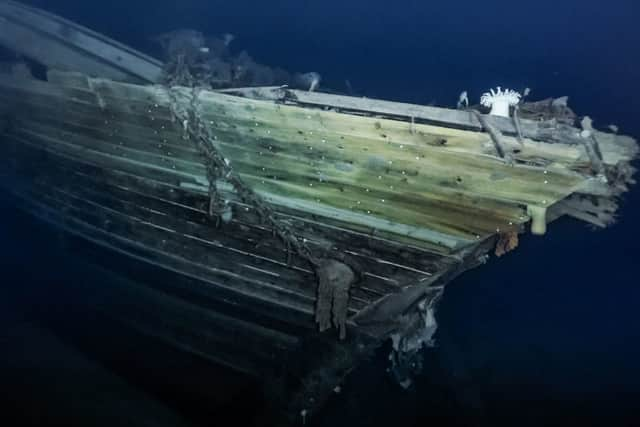
The wreck was surveyed but nothing was removed or disturbed.
It is protected as a Historic Site and Monument under the Antarctic Treaty, meaning it must remain untouched.
More than a century after Shackleton’s death, the Princess Royal’s visit to South Georgia will now put the spotlight back on the island that played such a decisive role in his extraordinary survival story and became his final resting place.
A message from the editor: Thank you for reading. NationalWorld is a new national news brand, produced by a team of journalists, editors, video producers and designers who live and work across the UK. Find out more about who’s who in the team, and our editorial values. We want to start a community among our readers, so please follow us on Facebook, Twitter and Instagram, and keep the conversation going. You can also sign up to our newsletters and get a curated selection of our best reads to your inbox every day.