
Meningitis lockdown? As vaccine rollout begins will the disease spread and should people restrict movement?

As the meningitis vaccine rollout continues in Kent, will the disease spread and what is the risk for the rest of the UK?
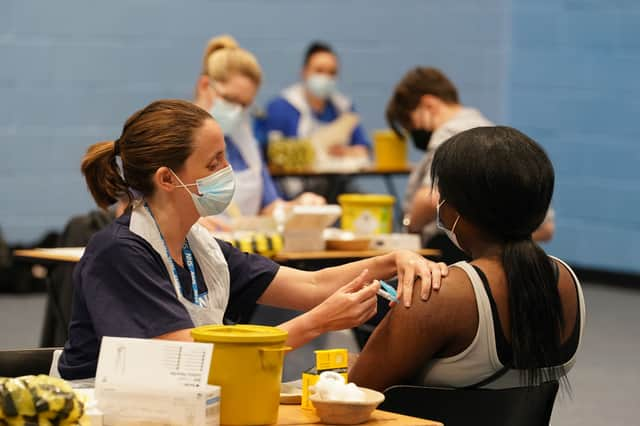
Students from the University of Kent Canterbury campus began receiving the meningitis B vaccine on Monday (March 18) amid an outbreak of the disease which has left two young people dead. The university said that alongside antibiotics offered, the menB vaccine is an “additional precautionary measure” available “to help protect students” from becoming seriously unwell with meningitis if exposed in the future.
Five new cases of meningitis have been reported in Kent, taking the total number being investigated by health officials to 20. The UK Health Security Agency (UKHSA) said that, as of 5pm on Tuesday, some 20 cases of meningitis had been reported to it, up from 15 previously.
Of these, nine cases have been confirmed in the lab and 11 remain under investigation. Six of the confirmed cases have been confirmed as the meningitis B strain.
Two students have died during the outbreak, including 18-year-old Juliette Kenny, who was studying for her A-Levels. The number of cases is expected to rise because the incubation period for the infection to when symptoms appear is two to 14 days.
The outbreak is being viewed by experts as unprecedented owing to the high number of cases appearing in such a short space of time. All reported cases so far have a link to Kent, and at least one person who fell ill and had links to Kent attended a London hospital.

Health Secretary Wes Streeting told BBC Breakfast: “What’s worried us about the Canterbury outbreak is the pace and extent of the spread of the disease. That is unprecedented, and that’s why we are being so proactive in the provision of antibiotics, because they’re an effective treatment, but also standing up vaccination at a pace and in a way that we wouldn’t normally do. I hope that that will give some reassurance to people.”
UKHSA chief executive Susan Hopkins said on Tuesday that officials were looking at a “super-spreader event”. She said : “I can’t yet say where the initial infection came from, how it’s got into this cohort, and why it’s created such an explosive amount of infections.
“I can say that in my 35 years working in medicine, in healthcare and hospitals, this is the most cases I’ve seen in a single weekend with this type of infection. It’s the explosive nature that is unprecedented here – the number of cases in such a short space of time.”
Who will get meningitis vaccine?
About 5,000 students will be offered a jab alongside courses of antibiotics. A letter to University of Kent students said the vaccine will continue to be available to eligible students on campus all week.
The Joint Committee on Vaccination and Immunisation (JCVI) does not currently recommend a routine menB booster vaccination for teenagers and young adults and there are currently no plans for a widespread catch-up campaign.
Could meningitis outbreak spread further?
Experts said the likelihood of further spread is “low”. Transmission of menB requires close and prolonged contact, such as living in the same house or intimate contact such as kissing.
Paul Hunter, professor of medicine at the University of East Anglia and an expert in infectious diseases, said: “It is not clear yet how common the strain causing this outbreak has been in recent years. Without that knowledge, difficult to say. But I think the likelihood of wider spread is still low.”
Other experts suggested there is no need for restrictions on movement and students in the affected area who are planning to travel home for Easter should do so. Dr Simon Clarke, associate professor of cellular microbiology at the University of Reading, said menB “is not as easily transmissible as some other respiratory viruses, such as flu or Covid-19”.
Meningitis symptoms and what to do if you think you have it
Symptoms of meningitis and sepsis can include a high temperature, cold hands and feet, vomiting, confusion, muscle and joint pain, pale, mottled or blotchy skin, spots or a rash, a headache, a stiff neck, aversion to bright lights, being very sleepy and seizures.
The UKHSA has urged those who think they may have symptoms to seek medical help by contacting their GP or calling NHS 111.