
Surge in Brits buying emergency supplies after Government warning - here’s what you need

Supermarkets report a surge in sales of emergency supplies following the Government's Be Ready campaign. Here's the recommended three-day checklist, from tinned food to wind-up radios.
British shoppers have been stocking up on tinned food, long-life milk and other emergency supplies following a Government campaign warning households to prepare for possible disruption to essential services.
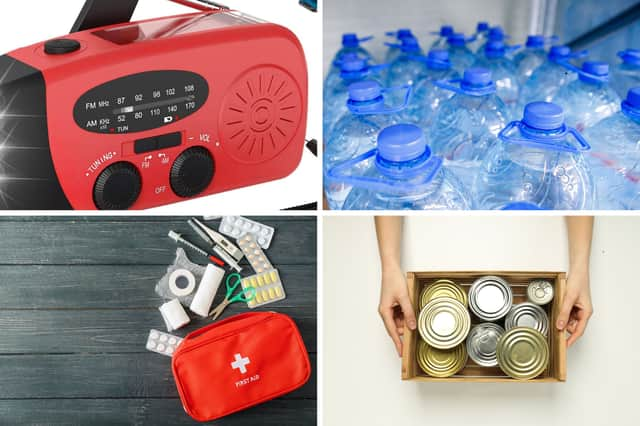

Official figures reveal the Government's new Be Ready campaign has triggered a surge in supermarket purchases, with families encouraged to keep enough food, water and other essentials to last at least three days.
The campaign, launched on October 22, is designed to help households cope with emergencies ranging from severe weather and power cuts to cyber attacks that could disrupt food supplies, communications and other everyday services.
And the message appears to be getting through, with supermarkets reporting a noticeable increase in sales of products including tinned goods and UHT milk.
According to the Office for National Statistics (ONS), food store sales volumes increased by 0.8% in October, their strongest monthly growth in six months.
The wider retail sector also enjoyed an unexpected boost, with overall sales volumes rising by 0.7% compared with September.
What is the Government's Be Ready campaign?
The Be Ready campaign encourages people to take straightforward precautions so they can manage for 72 hours if essential services are disrupted.
Defence Secretary Wes Streeting warned last month about increasingly sophisticated cyber attacks and the potential impact on businesses and supply chains.

The Government says being prepared does not mean panic buying or spending hundreds of pounds on specialist survival equipment.
Instead, households are encouraged to build up a modest emergency supply gradually, buying extra essentials during their normal weekly shopping.
What emergency supplies does the Government recommend?
The official Be Ready checklist recommends keeping a range of everyday items available in case of disruption.
These include:
- Bottled water: Three litres per person per day for drinking, enough to last at least three days.
- Long-life food: Tinned vegetables, meat and fish, dried fruit, nuts and other foods that do not require refrigeration or cooking.
- Wind-up or battery-powered radio: An FM radio to receive news and emergency updates during power cuts or internet outages.
- Torches and spare batteries: For lighting if electricity supplies fail.
- Power banks: Charged portable batteries to keep mobile phones and other essential devices working.
- First aid supplies: Bandages, plasters, antiseptic and other basic medical items.
- Essential medication: Regular prescriptions and any necessary medical equipment.
- Hygiene products: Hand sanitiser, wet wipes and bathroom essentials.
- Warm clothing and blankets: To help households stay warm if heating systems fail.
- Cash: A mixture of notes and coins in case card payment systems or cash machines stop working.
Families are also advised to consider supplies for babies and pets, and keep printed copies of important documents and emergency contact numbers.
Why are wind-up radios recommended?
One of the more unusual items on the Government's checklist is a wind-up radio, which can operate without mains electricity or an internet connection.
Unlike smartphones, televisions and internet-connected devices, these radios can continue receiving broadcasts during power cuts, provided local radio transmissions remain available.
Battery-powered FM radios are also suitable, but households should keep spare batteries available.
The Government recommends writing down the frequencies of local and national radio stations so they can be found quickly during an emergency.
Do households need to start stockpiling?
The Government stresses there is no need to rush out and buy everything immediately, with many families likely to have some of the recommended supplies already at home.
Households are advised to check their cupboards, identify any gaps and gradually build up supplies they would ordinarily use.
The official guidance also recommends reviewing emergency supplies every six months to check expiry dates and replace items where necessary.
The full Government checklist and emergency preparedness guidance are available online.