
Brits urged to keep cash at home as internet outage could hit card payments

Brits are being urged to keep cash and emergency supplies at home as new research warns some areas could be hit much harder by a major internet outage because they have fewer cash machines, food shops and essential services nearby.
Brits are being urged to keep cash and emergency supplies at home amid warnings that a major internet outage could leave some areas much worse off than others.
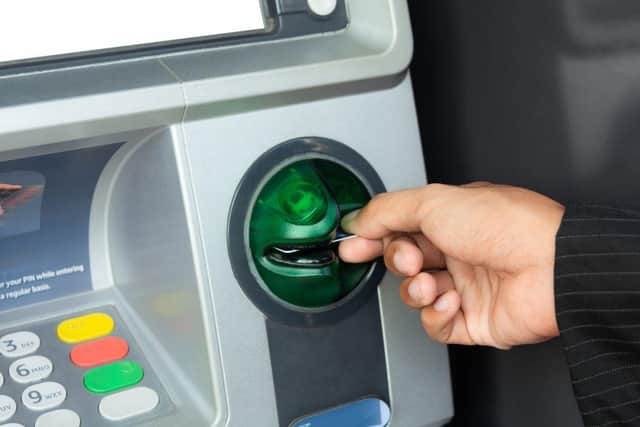

Households in places with fewer cash machines, food shops, pharmacies and other essential services could find it harder to get hold of money and basic supplies if digital systems suddenly fail, new research suggests.
An extended outage could knock out or disrupt card payments, online banking, communications and access to important information, leaving millions reliant on whatever services are still operating nearby.
The warning comes as the UK Government encourages households to prepare for up to three days of disruption to everyday services, including electricity, water, phone networks and the internet.
That includes keeping some cash at home, as card machines and cashpoints may not always be available during a serious outage.
Could your city cope with an internet outage?
New research from Wolfstone Digital compared 61 UK cities to see which have the best access to services people could fall back on if the internet went down.
Researchers looked at the number of free cash locations, food shops, pharmacies, healthcare facilities, Post Offices and libraries per 10,000 premises, alongside 4G coverage.
The results suggest there could be a big difference depending on where you live.
A city packed with cashpoints, supermarkets, pharmacies and other essential services would give people more options if online payments or communications failed. Areas with fewer of those services could face a much tougher time.
Norwich came top of the ranking, with 13.13 free cash locations, 27.11 food shops and 6.74 healthcare locations per 10,000 premises. It also recorded 99.85% geographic 4G coverage across the four major mobile networks.

Stirling came second, followed by Oxford, Lancaster and Nottingham.
The 10 cities ranked best prepared were:
- Norwich
- Stirling
- Oxford
- Lancaster
- Nottingham
- Derby
- Cambridge
- Newport
- York
- Sheffield
The ranking does not mean these cities would escape problems during a major emergency. Instead, it highlights how much access residents have to basic services that could become crucial if digital systems stopped working.
Adam Woodhead, tech expert at Wolfstone Digital, said: “An extended internet outage could affect payments, banking, communications and access to important information.
“Areas with free cash points and essential services nearby would give residents more practical alternatives while digital systems were unavailable.
“Mobile coverage may provide a temporary backup during a broadband outage, but it cannot be relied upon during every type of disruption.”
Why keeping cash at home could matter
Britain has become increasingly dependent on cards, phones and apps to pay for everyday purchases.
That works smoothly most of the time, but a serious internet, mobile network or power outage could make some payment systems unavailable.
The Government therefore recommends keeping a small amount of cash at home, including a mixture of notes and coins.
There is no set amount households are told to keep. The idea is to have enough available to pay for essentials if cards or digital payments temporarily stop working.
Writing down important phone numbers and knowing where your nearest pharmacy, Post Office and cashpoint are could also prove useful.
What should you keep at home for an emergency?
The Government says people should gradually build up enough basic supplies to cope for around three days rather than panic-buying an expensive emergency kit.
Recommended items include:
- Bottled water for three days, with around three litres per person per day suggested for drinking
- Three days of non-perishable food that does not need refrigeration
- A battery-powered or wind-up torch
- A battery or wind-up radio
- A charged power bank for phones and other devices
- Cash, including notes and coins
- Essential medicines
- A first aid kit
- Hand sanitiser, wet wipes and toiletries
- Blankets, sleeping bags and warm clothing
- Baby supplies, where needed
- Pet food and other animal essentials
See our Emergency Essentials Amazon list here
Households are also advised not to rely entirely on their mobile phones for important information.
Keeping key numbers written down could help if a phone runs out of power or mobile networks are disrupted.
For power cuts in England, Scotland and Wales, the number to remember is 105.
The latest advice does not mean officials are expecting a nationwide internet or power failure. It forms part of broader emergency planning designed to help households cope with anything from severe weather and flooding to power, water and communications outages.