
Asteroid 2024 YR4: Nasa reveals how big the space rock is and the chance of it hitting the moon


Astronomers have got a stronger idea of the size of an asteroid that could collide with the moon.
Asteroid 2024 YR4 was first spotted at the end of last year. At first it was thought that it could collide with the earth, with calculations in mid-February suggesting a 2.3% chance of our planet having an unwelcome pre-Christmas present when the space rock passes over on December 22, 2032.
But as more observations were made, it was found that there is in fact more likelihood of the asteroid colliding with the Moon. University of Arizona professor David Rankin said later that month that he thought there was a small chance of it in fact hitting our satellite.
As the Moon has no atmosphere to slow down incoming asteroids, a collision would be relatively greater and could create a crater, which in turn could shower Earth with debris - although this is not anticipated to cause major problems.
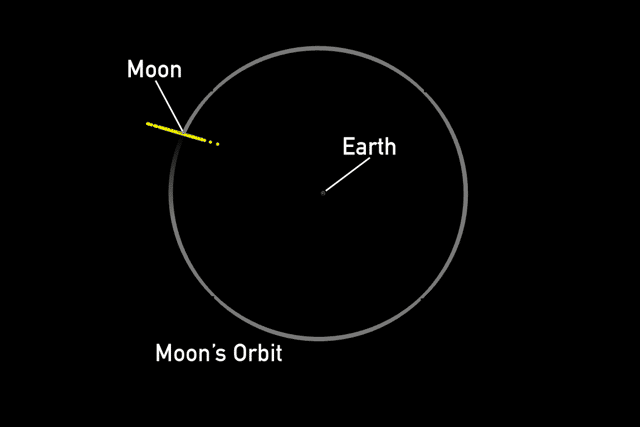
Now Nasa has said that new infrared observations from its James Webb Space Telescope have “decreased the uncertainty of the asteroid’s size” and that 2024 YR4 is now thought to be between 174ft and 220ft (53m to 67m), about the size of a 10-storey building. The previous size estimate was between 131ft and 295ft (40m-90m) so this has narrowed down the extremes.
However, the chances of TY4 hitting the Moon have been increase. Nasa’s Center for Near Earth Object Studies at the agency’s Jet Propulsion Laboratory have updated the previous estimate of a 1.7% chance from late February to 3.8% based on the Webb data and observations from ground-based telescopes.
While Nasa has been keen to flag the reassuring statistic that that therefore means “there is still a 96.2% chance that the asteroid will miss the Moon”, it has also said that it would not affect the Moon’s orbit.
It added: “After mid-April, asteroid 2024 YR4 will be too far and faint to be observed by ground-based telescopes but Webb will observe the asteroid again in either late April or early May.”