
British Summer Time: 1,600 royal clocks among millions to spring forward this weekend - for daylight savings

The painstaking process of changing hundreds of unique and precious clocks in the royal abodes is already underway
More than 1,600 clocks across the King’s official residences are among the millions that will spring forward an hour this weekend, as daylight saving time begins.
In the UK, the clocks will go forward one hour on Sunday morning (31 March) - at 1am. This should be automatic on internet-connected phones and other devices, although watches and other clocks might need to be changed manually.
This happens every year on the last Sunday in March as the UK moves into British Summer Time, to make use of the longer daylight hours. They won't go back an hour until the last Sunday of October.
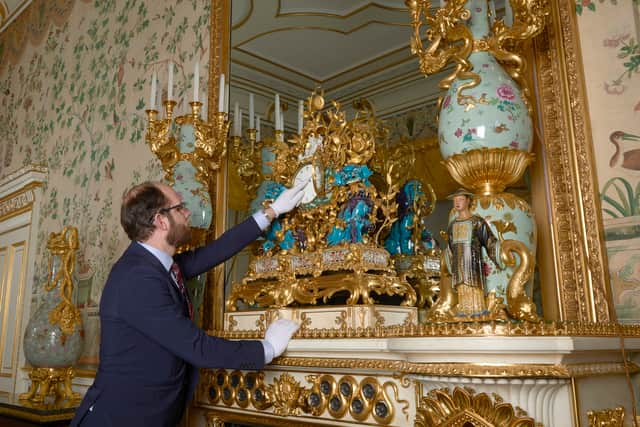

A team of three horological conservators will be working through the weekend to change the timepieces in the Royal Collection. They include 450 at Windsor Castle, 350 at Buckingham Palace and St James’s Palace in London, and 50 at the Palace of Holyroodhouse in Edinburgh.
The Royal Collection Trust has released new images to mark the day, showing horologists returning clocks to Buckingham Palace's east wing. Works of art are currently being reinstalled in the wing, after the completion of five years of renovation work.
The trust told PA that the timepieces in the collection are some of the finest and most historic items at the palaces, and include musical clocks, astronomical clocks and miniature clocks. The oldest in the collection is the Anne Boleyn Clock, which is said to have been given by Henry VIII to Anne Boleyn on the morning of their marriage in 1532.
The collection also includes Queen Charlotte’s watch, which was the first to have a lever escapement - and is considered to be a forerunner of modern wrist and pocket watches.