
Digital ID card: Veteran cards now available for ex-members of armed services - the first step of new scheme, how will it work?

Digital ID cards are no available for veterans - the first step in the digitisation of almost every form of ID.
From today (Friday 17 October), digital veteran cards are available for ex-members of the armed services. It is part of the same programme for pretty much all forms of government identification to be accessible on your phone by the end of 2027.
This will mean passports, driving licences, national insurance cards and many more being virtual. The minister in charge of the rollout, Ian Murray MP, crowed of the benefits of having documents on your phone and how it will make life easier.
"We all use our smartphones for everyday life," he explained. He added: "So it's about making the relationship with the citizen easier and making their access to government services easier."
Mr Murray said he is looking forward to the end of "having to continuously fill out my name, my address, my telephone number" and instead just scanning his phone.
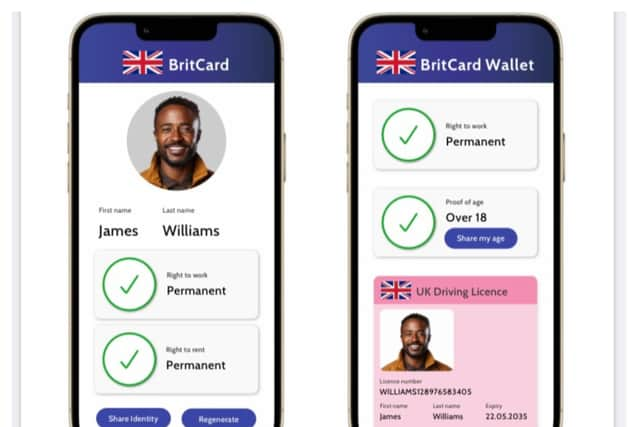

How will it work?
Having all government documents accessible in an Apple or Google Wallet-style app is the end goal, and the solution is being built on similar secure technology that underpins storing payment cards on your phone. The work is being done in house by Government Digital Service, part of the Department of Science, Innovation and Technology, that houses the digitisation expertise in Whitehall.
Any mention of digitisation of the personal information raises questions around security, but the government insists its solution is safe with a "federated" approach. To use the example of a veteran's ID, this would mean that the original data of who is a veteran, where they served, and all other relevant information would remain with the Ministry of Defence.
Once the sign-in and verification with this data has been completed on a phone, this can then be used to prove someone is a veteran, and easily give them access to housing, mental health support, shopping discounts, museum entry and other benefits, the government says. For driving licences, the data would stay with DVLA, passports with the passport office, and national insurance with the Department for Work and Pensions.
Those who have worked on the creation of the software say this stops the creation of a single vault of everyone's personal data in one place. In order to get the card on your phone, you would need to use the phone's security - such as a face scan, fingerprint, or pin code.
There is even talk that technology like contactless could be used with the government's version of the wallet to tap and verify things like age in an off-licence.