
Hemlock Roots: Warning to dog owners as pets dropping dead on UK beaches from 'killer' plant - what does it look like?

Dog owners are being urged to stay away from a 'killer' poison plant that has been spotted on the shores of several UK beaches.
At least four dogs have died and many more taken sick after going for walks on popular beaches in Cornwall and Carmarthenshire, south-west Wales. It is not yet clear what is causing the symptoms, which include sickness and diarrhoea, but owners are suggesting their pups might have digested the deadly Hemlock Roots.
The plant, which is nicknamed 'dead man's fingers', is widely recorded as the most toxic plant to both humans and animals growing in the northern hemisphere. Sightings of the 'poison parsnips' have led Carmarthenshire County Council and Cornwall Council to advise dog walkers to stay away from their beaches for the time being.
They also told owners to 'stay vigilant' and recommended they seek assistance from a vet as soon as possible if their hound has ingested or touched the plant. A three-year-old English Bull Terrier, named Duke, was one of the dogs who recently died after being taken for a walk at Little Fistral in Newquay, Cornwall.
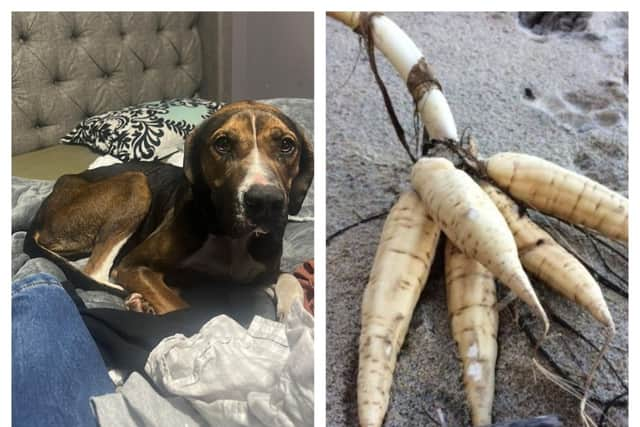

A number of other visitors to Fistral Beach and Little Fistral beach have reported their canines becoming unwell in recent weeks following walks at the popular tourist destinations. There have been similar reports from other dog-friendly beaches in the Newquay area and at Llansteffan beach in Carmarthenshire.
Several owners have had to spend hundreds of pounds on vet bills, such as Lottie James, whose nine-month-old puppy fell ill after visiting the Carmarthenshire beauty spot. The 29-year-old says she has spent £250 so far, but claims other pet owners she knows 'have spent over £1,000 on getting their dog better' after visits to the beach.
She told the BBC: “We took her to the vet, because I could see that she was in quite a lot of pain, her tail was between her legs, she was very weak, off her food, off her fluids. It has scared us a little. We're going to wait and see until maybe something is done about it.”
A number of other theories have also been offered for this sick dog mystery, with some suggesting the cause may be dirty puddles and potential sewage issues. But the fears surrounding the Hemlock Roots have led local officials to advise owners to avoid their beaches for the time being.
A spokesperson for Cornwall Council said: “We have received reports that Hemlock roots, which can be poisonous to animals, have washed up in the Fistral and Little Fistral area. Hemlock is native to Cornwall. During the winter it can be washed downstream from riverbanks and ends up on our beaches. As a precaution, we are putting up signs urging dog owners to be vigilant and keep their pets on a lead”.
What does Hemlock Roots look like?
Poison hemlock's root is a thick, white taproot that looks like a carrot. It's highly toxic and can be fatal to humans and animals. Poison hemlock is a member of the carrot family
It's often mistaken for wild carrot, wild parsnip, or wild parsley. It has finely-divided, lacy leaves with fine hairs and has solid green stems. It also has white, delicate, “umbrella-like” flowers