
Who is Amir Tataloo?: Iran denies issuing death penalty for exiled rapper accused of blasphemy

Iran has denied reports claiming that exiled rapper Amir Tataloo, has been sentenced to death for blasphemy.
Real name Amirhossein Maghsoudloo, the musician was reportedly sentenced to death after local media, including the reformist newspaper Etemad, suggested that Iran’s Supreme Court had upheld a death sentence for the underground artist on charges of insulting the Prophet Muhammad.
On Sunday, Iranian authorities stated that the reports were false, noting that Tataloo’s case had not resulted in a death sentence and that he was “recently eligible for leniency under legal provisions.” According to Iran International, the judiciary said there is restorative justice approach in his case.
Amir Tataloo, 37, is one of Iran’s most controversial and influential artists, famous among Iranian youth for his bold lyrics and heavily tattooed appearance, including tattoos covering his entire face. Despite his popularity, he has been a polarising figure due to his confrontational style and brushes with Iranian authorities.
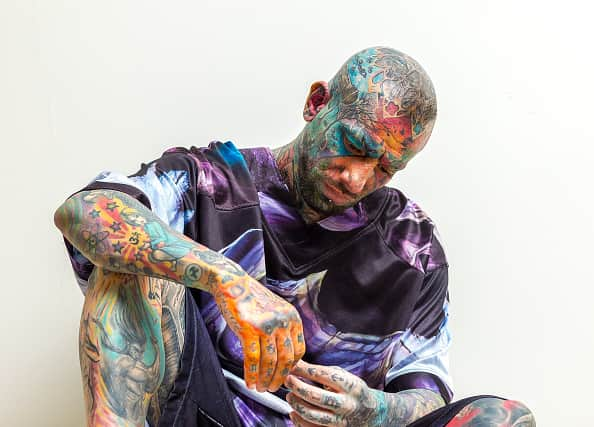

Tataloo’s legal troubles include convictions on several charges - a three-year sentence for blasphemy, a 10-year sentence for “promoting prostitution” and dditional charges for disseminating obscene material and spreading propaganda against the Islamic Republic.
Blasphemy charges in Iran can carry the death penalty. However, in Tataloo’s case, this charge was previously overturned and referred to another court. Reports from Etemad suggested that a prosecutor’s objection reopened his case, resulting in a death sentence, but this has now been denied by authorities.
Tataloo lived in exile in Istanbul, Turkey, from 2018 until December 2023, when Turkish authorities deported him back to Iran. Despite his detention, Tataloo had previously demonstrated support for the Iranian government, even releasing a 2015 song promoting the country’s nuclear program.
In 2017, he met ultra-conservative politician Ebrahim Raisi, who later became Iran’s president, in what appeared to be an attempt to appeal to young Iranians. However, Tataloo’s provocative image and lyrics have remained at odds with the Islamic Republic’s strict cultural and moral codes.