
Mystery of four WW2 Lancaster bomber airmen solved after 80 years
A remarkable investigation into missing wartime records has finally identified four Lancaster bomber crew members whose graves were marked 'unknown' for decades.
Four airmen killed when their Lancaster bomber was shot down over Germany have finally been honoured by name after decades of mystery, missing records and a remarkable investigation.
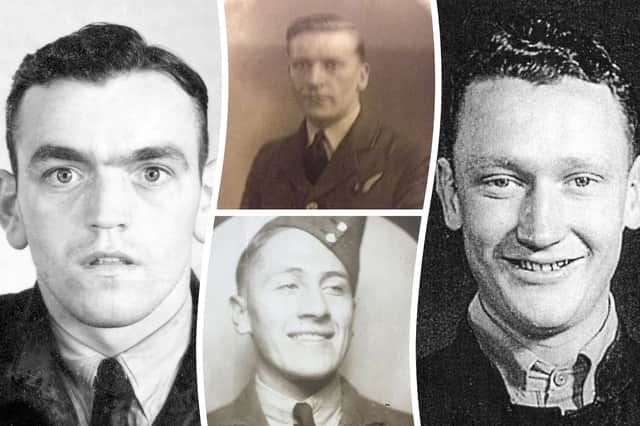

For more than eight decades, the men had lain in a war cemetery in the Netherlands, their identities lost following a series of administrative mistakes in the aftermath of the Second World War.
Now painstaking research by Ministry of Defence investigators has established exactly where they were buried, allowing their families to see their names on their graves for the first time.
The four men were Pilot Officer John Henry Tales, 26, from Sheffield, Flying Officer Leslie Markland Hough, of the Royal Australian Air Force, Sergeant Henry Charles Burnside, 22, from Brentford, and Sergeant John Lawson, 21, from County Durham.

All four served aboard Lancaster bomber PD374, which was shot down during a mission to attack a German oil plant in the Ruhr region in 1944.
The aircraft, belonging to No. 218 Squadron, had taken off from RAF Methwold in Norfolk alongside more than 130 other bombers.
But German anti-aircraft fire struck the Lancaster, setting its engines and fuel tanks ablaze before it plunged into a field near Horstgen.
Three crew members managed to escape and were taken prisoner. The other four lost their lives.
Eyewitness accounts suggest Australian captain Hough remained at the controls of the burning aircraft to give his fellow airmen a chance to escape.
There are also reports that Tales, who may have parachuted from the aircraft, was killed on the ground by members of the German SS.
How a paperwork mistake left four war heroes unidentified
The four airmen were originally buried in Germany before their bodies were transferred to the American military cemetery at Margraten in the Netherlands.
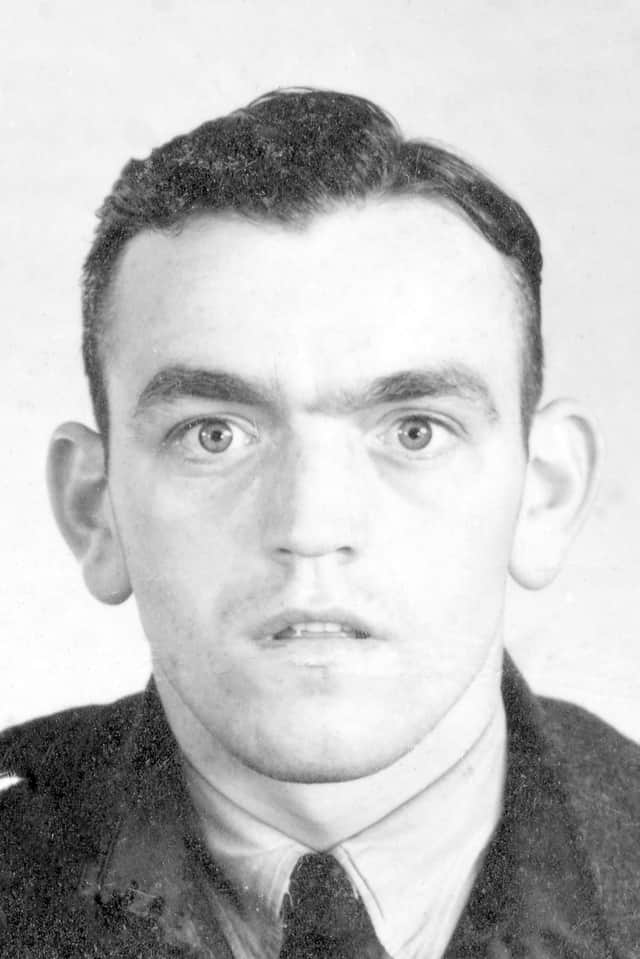
They were subsequently moved to Venray War Cemetery, but a crucial mistake in the records meant their identities could no longer be confirmed.
Documentation referred to a burial location called "Dash", which investigators were unable to identify. Researchers eventually established the connection with the men's original graves at Dashberg.
Further discrepancies, including burial dates being incorrectly recorded as dates of death, added to the confusion.
The breakthrough came when the Ministry of Defence's War Detectives reconstructed the complicated trail of paperwork, finally matching the four unidentified graves with the missing Lancaster crew.
Their graves were formally rededicated at a ceremony on October 7, attended by relatives and military representatives.
Families finally able to honour their loved ones
Among those attending was John Tales, nephew of the Sheffield airman, who was one of 11 children and had joined the RAF in 1939.
Despite completing a full tour of dangerous bombing missions, Tales had volunteered to return to operational duties.
His nephew said: "It has been an extremely poignant occasion and we are honoured and quite overwhelmed to have been here.

"It has been wonderful to learn more about our Uncle John and we would like to thank all those who have made this possible."
Sergeant Lawson, affectionately known as "Geordie", came from a mining family, while Sergeant Burnside was remembered for his professionalism and immaculate appearance.
Lawson's nephew Thurston, who attended with his cousin John, described the ceremony as a "fantastic day and incredibly memorable".
Reverend Group Captain Ruth Hake, who conducted the service, said the men had given their lives in defence of the nation and that naming their graves meant their sacrifice could finally be properly recognised.
Dr Daniel Seaton, of the Commonwealth War Graves Commission, welcomed the breakthrough, saying relatives could now visit the identified graves of their loved ones, which would be maintained in perpetuity.
After more than 80 years, four men who had been remembered simply as unknown airmen finally have their names restored to their resting places.