
Breast cancer: Not all mammograms are the same and women need to know that Dense Breast matters

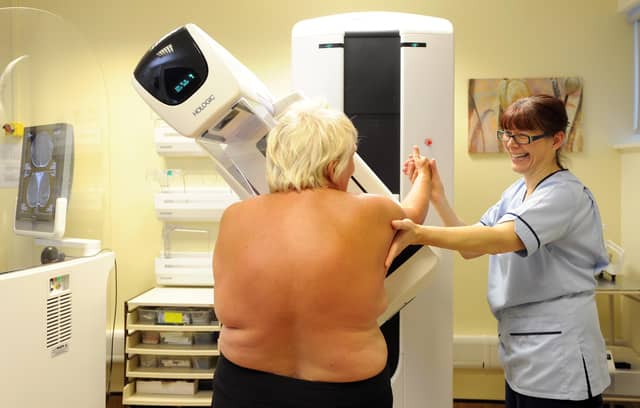

As we move through October, we reach the day – Monday 13th - chosen each year to mark Metastatic Breast Cancer Awareness Day (or, Secondary Breast Cancer Day) when we remember that over 61,000 people in the UK are currently living with the disease which has become incurable.
Despite all the work by the breast cancer charities, a recent YouGov survey showed that 40% of adults in the UK have never heard of secondary breast cancer, 36% do not know what the symptoms might be and 37% had no idea that breast cancer in men can metastasise. I suspect there were many more who did not know that men can develop breast cancer in the first place.
The second important day in October is 24th which will be World Dense Breast Day. It is often through someone’s personal experience that clinicians are persuaded to change their views and so it was when Cheryl Cruwys was diagnosed with early-stage breast cancer in 2016. Cheryl was living in France, where the standard practice is to perform supplemental screening if the breast tissue is dense – as it was in Cheryl’s case.
It was a different story for Cheryl’s friend, Terry Bainbridge in the UK. This extra screening was not happening here, yet the density of tissue supersedes all other risk factors. Terry had found a lump and she was given the choice of having the breast removed, or just the lump. She chose a mastectomy ‘just to get rid of it’. The result showed not only the lump, but – underneath - a tumour the size of a satsuma, which had probably started growing 10-15 years previously, in her twenties. Terry had undergone previous mammograms but the tumour was not detected because of her dense breast tissue, which appears white on a mammogram.
The two women were determined to raise awareness and, using Terry’s experience, to persuade clinicians and researchers of the importance of extra screening. Sadly, Terry died a few years ago, but Cheryl continues their campaign – Breast Density Matters. She works now in collaboration with Dense Breast Info - densebreast-info.org – as its European Education Coordinator. As the website states, Cheryl has been ‘instrumental in breast density education in the United Kingdom’.
Dense Breast Info was founded in the USA by JoAnn Pushkin – whose experience of breast cancer mirrors Cheryl’s – and Wendie A Berg, Professor of Radiology and a specialist in breast imaging. The organisation’s message is extremely powerful. Patients have a right to know the risk, know their breast density reading and then to have the correct screening for their breast type.
Looking at the figures – more than 40% of women over the age of 40 have dense breasts – it is hard to believe that it has taken so long for clinicians and researchers to be persuaded that the denser the breast, the bigger the risk of developing breast cancer and the easier it is for the tumour to hide. According to a UK survey in 2022, the problem seems to be that there were no guidelines in how to report and manage patients with dense breasts. Unlike in the USA, it is not standard practice to inform patients of their breast density score after a mammograms, so this information was not routinely shared.
Cheryl and Breast Density Matters are pushing for a change, arguing that not disclosing this vital information is giving the patient an inaccurate reading of the mammogram. ‘In the UK, annually, approximately 3,500 cancers are left undetected in dense breasts’. This statement was part of the evidence Breast Density Matters gave to the UK’s Screening Committee in August of this year. Whilst it is always a question of the NHS finding the funding, surely some of the recent £29 billion promised by this government in the last Review of Spending absolutely must go towards extra screening for these vulnerable patients.
In the meantime, patients will have to be their own advocates but, for any help and support, please visit densebreast-info.org or Breast Density Matters UK on Facebook.
++++
I was sad to see the death announced of Verity Reily Collins. Verity was a remarkable woman who was determined not to let her breast cancer diagnosis interfere with her life. She started ‘After Cancer’, a website devoted to ways of finding fun while living with or after treatment. I remember visiting her in her basement flat in Fulham and finding what The Times’ described as a ’no-nonsense’ figure. She told me something of her life but her Obituary opened my eyes to her extraordinary exploits. She died, aged 86 - a truly remarkable woman.