
"Labour’s fee hike turns higher education into a costly dream"
Bridget Phillipson has announced a rise in university tuition fees for the first time in eight years.
Education Secretary, Bridget Phillipson, has announced the cost for new students will go up from April 2025 to £9,535 - a rise of £285-per-year. Tuition fees had previously been capped at £9,250 for domestic students in England since 2017. Phillipson also announced an increase in maximum maintenance loans, which will now rise in line with inflation, providing students with an additional £414 per year to help cover living expenses.
As a graduate of just a few months I am struck by a powerful dichotomy. Selfishly, I am counting my lucky stars that I managed to get through four years of higher education without this price increase. It was only logical that fees were eventually set to rise alongside inflation. Whilst the price of pretty much everything else around me shot up, somehow my fees remained a welcome constant. In fact, I would even go as far as to say I got a bargain price at just £9,250 (multiplied by three, plus £12,310 for my Master’s degree and of course, yearly interest!).
In actuality, the increase of £285 per year is relatively low and in keeping with the rate of inflation. But what about the compounding interest from this increase? Take me for example - I only finished my degree in late September, and though I have not even walked across the stage of my graduation ceremony yet, somehow, I have managed to amass £2,118.73 in interest on my loan. This brings my total debt to a lovely £60,843. If I was a student starting University next year, paying the extra £285, after four years I would have accrued an extra £224 of interest. This means the total repayment would come to £1080 more than what I had to pay. I don’t know about you, but I would certainly say this adds up.
But a key detail that is missing from this calculation is that it will have minimal impact for most borrowers. This is because despite increased tuition fees most students won’t pay more each year due to repayments only starting when earnings exceed a set threshold, repaying 9% of income above this limit. The increase therefore mainly affects high earners who can fully repay loans within 40 years. Lower earners will continue making threshold-based payments, unaffected by fee hikes. More impactful was the 2023 shift, reducing the repayment threshold and extending repayment terms to 40 years, leading to significantly higher lifetime payments for many graduates.
But putting my own egocentrism aside I cannot help but wonder how I have somehow subscribed to the belief that education should ever cost that much - inflation or not. Though I am unlikely to ever be on a salary that requires me to repay my loan in full, I will eventually be hit with what is essentially a ‘graduate tax’ purely because I chose to further my education. Surely students should not be punished for studying hard enough to be accepted into a higher education institution. They are the future employees and researchers of the UK, dedicating their lives to becoming contributing members of society- and that somehow costs them money?
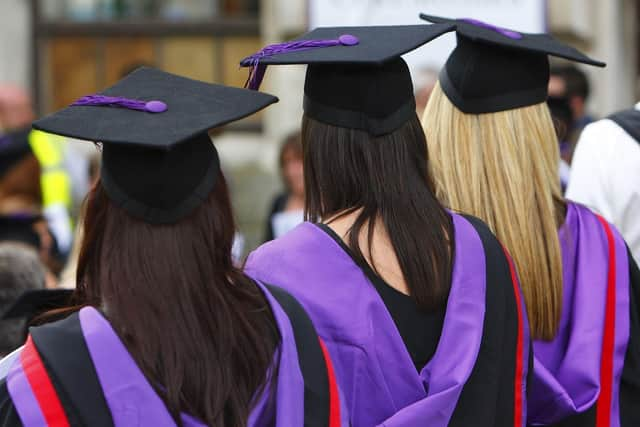

It is unconscionable that the British government has allowed education to become a symbol of class division, where opportunities are determined by the wealth into which one is born. Though some aspects of this are unavoidable, making education accessible is one feasible way the government could finally start to change this.
Universities have increasingly adopted a business-like approach. Since the UK introduced tuition fees in 1998, universities have relied more on student funding than government grants, incentivising them to attract large numbers of students. High tuition rates and substantial student debt have turned higher education into a lucrative market. In line with this shift, universities have expanded their administrative structures, creating corporate-style management roles with high salaries. This undermines the traditional mission of knowledge and public service and is a system that continues to be perpetuated by a government that has placed the issue on the back burner.
Perhaps I would not feel as strongly if investing this money into my education guaranteed me a job related to my qualification level. But after four gruelling years of study, I have ended up moving back into my parents’ house, working at the same job I started at 16 when I had no degree to my name. This is a direct result of university fees- as universities have emphasised enrolment numbers and revenue, they have also inadvertently contributed to an oversupply of graduates. With more students entering higher education the competition for job openings has intensified. A degree was once a distinguishing factor but now it has become a baseline requirement for many positions. So even though, in real terms, this increase in fees may not actually affect graduates, the principal of the matter is that a labour government, one that is committed to decreasing inequality, has taken a stand that endorses the opposite.
Was it not our Prime Minister, Keir Starmer who said that he would make it his mission to abolish University fees back in 2020? In fact, his exact words were: ‘We lost the election, but we did not lose our values or determination to tackle the injustice facing young people going to university’. Perhaps the power went to his head because it certainly seems like Labour have lost their values and determination when it comes to this topic. Of course, it did not come as a surprise the government would not be abolishing tuition fees, as Starmer admitted this during the recent general election, citing a poor economic situation. However, he did make a commitment to ‘fairer package’ for students. One would at least assume that this fairer package would include a freeze on fees.
The one silver lining from this announcement was the fact that the maintenance loan would also be rising alongside inflation. Arguably, the money it costs to live at university, and move out into accommodation is far more of a concern to prospective students than the tuition loan. The increase in cash-in-hand support of 3.1% will provide as much as £414 extra per year for those on the highest loan, equating to £34.50 a month. This increase will certainly make a difference, but it also does not change the fact that the maintenance loan often barely covers the cost of accommodation, let alone the price of food and - God forbid - a few fun nights out.
So, though I commend the government for finally listening to the cries of students to raise maintenance loan, this is only a plaster hastily stuck atop a bleeding wound. The university fee system needs an overhaul and though technically the amount students are paying has stayed the same in real terms, it is also a statement from the Labour government about their priorities which do not fall in line with the expectations of many of their voters.