
Can you get Legionnaires' disease from hotel air conditioning? British woman in intensive care after Greek holiday

A British tourist is in intensive care after reportedly contracting Legionnaires’ disease while on an all-inclusive holiday in Greece.
Donna Jobling, 57, from Hull, fell seriously ill during her two-week trip to Crete with husband Sid and two close friends. She is now being treated in the intensive care unit at Venizeleio Hospital in Heraklion, where she has remained since June 11.
According to her niece, Klaire Keita, Ms Jobling first developed a chest infection on June 5, which progressed to acute respiratory failure and pneumonia. “We just don’t know what’s going to happen. We’re just trying to do the best we can for her,” Ms Keita told the BBC: “She is just the best person you could ever hope to meet.”
Legionnaires’ disease is a potentially fatal lung infection caused by inhaling water droplets containing Legionella bacteria. It is most commonly contracted in places like hotels, hospitals or large office buildings, where contaminated air conditioning systems, spa pools, or showers can harbour the bacteria.
While the source of Ms Jobling’s infection has not yet been confirmed, a spokesperson for easyJet Holidays — the company that arranged the trip — said: “We’re so sorry to hear that Ms Jobling is unwell, and we’re continuing to support her and her family in every way we can.”
As a precaution, the company confirmed that other guests had been moved out of the hotel where Ms Jobling was staying, and that it had also contacted customers who had recently returned from the same property. “Our customers’ safety and wellbeing is our top priority,” the spokesperson added.
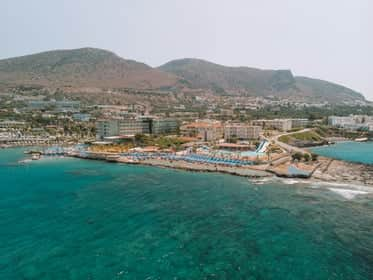

The Greek health ministry has since issued a directive to hoteliers across Crete, urging them to “raise awareness among all those involved in monitoring the quality of water for human consumption especially with regard to Legionella.”
An emergency alert was also issued on the island by the European Centre for Disease Prevention and Control following confirmation of the case. The affected hotel is understood to be working with local health authorities.
Ms Jobling’s friend, Paula Mason, 52, who had travelled with the couple from Hull, said: “I felt awful having to leave my best friend there. Donna has a heart of gold. She would do anything for anyone. We are all still in shock.”
“She was looking really healthy at the start of the trip. Nicolas and Sid had booked the trip as a surprise for us women. Donna was really looking forward to it.”
A spokesperson for the Foreign, Commonwealth & Development Office said: “We are supporting the family of a British woman in hospital in Greece and are in contact with the local authorities.”
What is Legionnaires’ disease?
Legionnaires’ disease is caused by Legionella bacteria, often found in water systems that are not properly maintained — such as those in air conditioning units, hotel plumbing, or spa facilities. Symptoms can include a high temperature, cough, shortness of breath, and chest pain, and the illness can lead to pneumonia or even death.
Those at greater risk include people over 50, smokers, and individuals with chronic lung conditions or weakened immune systems.