
Edinburgh Airport: Major new security change for liquids and electronics at Scottish airport - and it's a welcomed one

A major change has been announced at a UK airport in terms of liquids and electronics.
A new security system means passengers at Edinburgh Airport can now keep liquids and large electrical items in their bags. Eight scanners costing £24m have been installed at the international hub.
Liquids still need to be 100ml or under but can remain in bags. Officials said it means the airport will no longer issue single-use plastic bags, delivering a sustainability benefit through the project.
An extra two lanes have also been added to the security hall at the airport. Michael Hering, head of security at the airport, said it would allow passengers to move through security even quicker than they currently do.
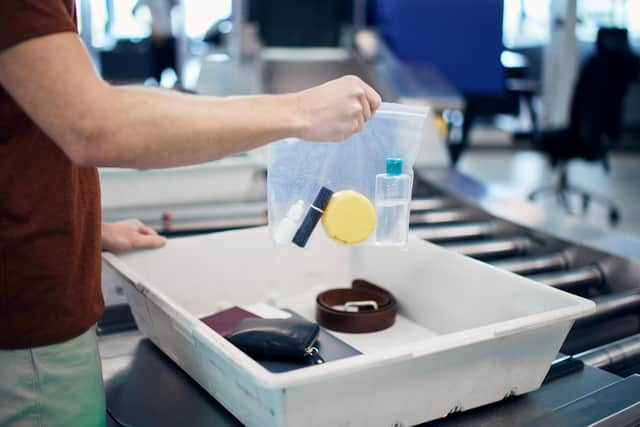

He said: "This will be welcome news for the millions of passengers who travel through Edinburgh Airport every year, and we're glad to be able to complete this project and speed up the process. We've invested almost £24m to install this cutting-edge technology to improve the overall experience for passengers, and 97% of passengers are already passing through in under 10 minutes.
"It's also important to note that our high safety levels have been maintained and improved on due to the 3D technology, meaning it is a faster, more secure process in time for peak summer." As part of a multi-million pound investment in its security hall, Glasgow Airport has been installing state of the art next generation security checkpoint scanners, which allow passengers to keep electronic devices, such as laptops, in their hand baggage during screening.
Highlands and Islands Airports Limited, an executive non-departmental public body wholly owned by Scottish ministers which owns and operates 11 airports, has also upgraded its security measures and scanning devices, which allows passengers to leave electronic devices in bags. The UK government had initially set a deadline of 1 June 2024 for the introduction of the new scanners, but it later granted airports an extension of a year after many said they would not be able to install them in time.