
I tried intermittent fasting and lost 16lb now new study says it beats calorie controlled diet for weight loss

I tried intermittent fasting - by accident - and have so far lost more than a stone in weight, now a new study says the trendy diet loved by celebrities could be better than counting calories.
After having two children in my thirties I piled on the pounds and, now in my forties, I have become increasingly concerned how the extra weight might be affecting my health. However, in a busy household where I cook family meals from scratch, I simply don’t have time for special diets or calorie counting, so I began thinking how I could slim down without adding extra tasks to my already groaning workload.
The first thing I thought about was cutting out breakfast. I have never been a fan of eating early but while I was breastfeeding I aimed for three square meals a day as I knew feeding a baby would deplete my own resources. In fact, I think a lot of my issue with extra weight was I continued to eat as much as I had been while breastfeeding, without burning those milk-making calories.
I immediately found that by not eating breakfast, I was no more hungry by lunchtime than if I had. In fact, I’m less hungry if anything and often skip lunch too, perhaps having a snack late afternoon, but often I will just go straight through to dinner when I am, admittedly, quite ravenous.
When I do eat, I allow myself as big a portion as I like and, except for cutting right back on sugary drinks which are just loaded with empty calories, I don’t deny myself dessert or sweet treats like chocolate and biscuits, if I feel like it. Admittedly I don’t eat things like that every day but certainly several times each week.
It wasn’t until after I made these changes that I heard about the new diet trend of intermittent fasting. It’s all the rage apparently, with celebrities such as Jennifer Aniston, Kourtney Kardashian and Halle Berry all speaking highly of it.
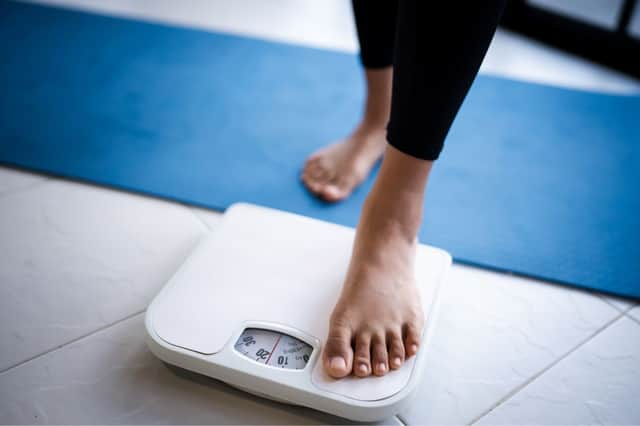

Now, a new study has revealed this method of weight loss could be more effective than a calorie controlled diet. Participants in the research used the "4:3" intermittent fasting plan, restricting calorie intake for three days a week, then eating as you like for the other four days.
The clinical trial compared the effects of this type of fasting to daily caloric restriction on weight loss in adults who were overweight or obese. The findings, published in the journal Annals of Internal Medicine, showed that 4:3 intermittent fasting resulted in modestly greater weight loss over 12 months.
Researchers from the University of Colorado School of Medicine randomly assigned 165 overweight adults to one of the diets for 12 months to compare weight loss. Study first author Professor Victoria Catenacci said: "At 12 months, participants in the 4:3 intermittent fasting group had a minus 7.6% change in body weight compared to minus 5% in the calorie restriction group."
She said 58% of those in the fasting group achieved weight loss of at least 5% at 12 months compared to 47% in the calorie restriction group.
Prof Catenacci added: "Participants in the fasting group also achieved more favourable changes cardiometabolic outcomes including systolic blood pressure, total and low-density lipoprotein cholesterol levels, and fasting glucose level."
The research team said findings suggest that because fasting does not require participants to focus on counting calories and restricting food intake every single day, it may result in "greater adherence" and I have to agree.
I would never have stuck to calorie counting, or other diets where you have to be restrictive on the types of food you are allowed to eat - I simply wouldn’t have the time or willpower. My goal is to lose another stone in weight and I’m hoping this slight tweak in how I eat will continue to be as successful as it’s proved to be so far
What is intermittent fasting?
Intermittent fasting involves cycling between periods of eating and fasting, and there are various methods to choose from including 16/8, 5:2, alternate-day fasting (ADF), and One Meal A Day (OMAD), each with different eating and fasting windows.
The method I seem to have naturally fallen into is the 16/8 where I don’t eat any later than 8pm and won’t eat again until around midday - so a 16 hour fast and an 8 hour eating window.
The 5:2 method means you eat normally for five days a week and restrict calories to 500-600 on the other two. Those who choose ADF alternate between days of normal eating and days of very low calorie intake, or complete fasting. And OMAD is what it says - consuming all daily calories in a single meal, with the rest of the day spent fasting.