
Asian hornet warning as invasive predator spreads across southern England
Beekeepers are urging the public to stay alert for Asian hornets after a sharp rise in sightings and nests, warning the invasive predator could devastate honeybee colonies.
A fresh warning has been issued over the spread of Asian hornets in Britain as beekeepers fear the invasive predator could wreak havoc on honeybee colonies.
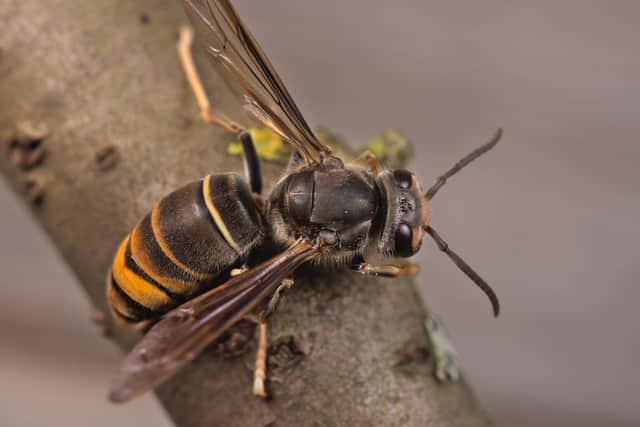

The yellow-legged hornet is being found in growing numbers across southern England, with Hampshire and the Isle of Wight among the areas causing particular concern.
Experts say autumn is a critical time because the hornets lie in wait outside hives, picking off honeybees as colonies desperately try to build up enough strength to survive winter.
Simon Noble, founder and head beekeeper at The Noble Bee, manages more than 100 hives across the New Forest and says the threat is now very close to home.
“A few years ago the Asian hornet was something we read about in France. Now nests are being found a short drive from our farm,” he said.

“Officially it’s ‘not yet established’ in Britain, but that gap is narrowing, and a good many of us who deal with it on the ground suspect it may already be here to stay.”
The numbers have risen dramatically.
So far in 2026, 201 yellow-legged hornet sightings have been reported in the UK and 66 nests found.
By comparison, there were just 22 confirmed sightings in Great Britain between 2016 and September 2022.
The National Bee Unit destroyed 72 nests across 56 locations in 2023. In 2025, 161 nests were recorded alongside more than 500 credible sightings.
Simon warned that even a single hornet can cause serious problems for a hive.
“One hornet stationed outside a hive can kill dozens of foragers in a day,” he said.
“The bees get too frightened to leave the hive to forage, so a strong apiary can be brought to its knees going into winter.”
Beekeepers are now urging the public to help spot the insects before new nests can spread further.
“Stopping this species requires help from the public,” Simon said. “If you see something that looks wrong, take a photo from a safe distance and report it.”
How to spot an Asian hornet
Asian hornets are smaller than Britain’s native European hornet.
The biggest giveaway is the abdomen, which is mostly dark with one clear yellow-to-orange band.
They also have yellow-tipped legs and an orange face.
Nests are often built high in trees and can become easier to spot as leaves fall during autumn.
What to do if you see one
Anyone who spots a suspected Asian hornet should take a photograph from a safe distance and report it using the free Asian Hornet Watch app, the official online reporting system or by emailing a picture to [email protected].
People are warned not to try to catch hornets around a nest or attempt to destroy a nest themselves. Reports can be investigated by Defra’s National Bee Unit.
Asian hornet stings are not considered worse than those of native European hornets, but they can be dangerous to anyone with a serious allergy, while disturbing a nest can trigger an attack by multiple insects.
A full identification guide, including a comparison with European hornets, is available through The Noble Bee’s Asian hornet guide.
People should not try to capture a hornet near a nest or attempt to destroy a nest themselves. Reports are investigated by Defra’s National Bee Unit, which can take specialist action.
An Asian hornet sting is not considered more severe than one from a native European hornet, although stings can be dangerous for people with allergies and disturbing a nest can provoke multiple insects.
A full identification guide, including pictures comparing the species with the European hornet, is available from The Noble Bee’s Asian hornet guide.