
Tapo D260 review: Superb 4K footage without a subscription

This article contains affiliate links. We may earn a small commission on items purchased through this article, but that does not affect our editorial judgement.
Sharp footage, clever alerts and no compulsory subscription make Tapo’s flagship doorbell a convincing proposition, although one omission takes the shine off its £220 price.
Tapo's best doorbell yet, the D260, might be one of the most appealing on the market so far, for a variety of reasons - but it is also its most expensive.
At £220 it's top-end money for a video doorbell. There are some big benefits to spending that sort of money, though. Chief among these is Tapo's subscription-free ethos. Too many gadgets these days put their best features behind a paywall, but pretty much everything's available with a Tapo, right out of the box.
I'll get to those features shortly, but the other really important one is its ability to record and stream in 4K. That's not unheard of in the video doorbell world, but it's a seriously powerful attribute.
What I liked about the Tapo D260
The most appealing thing about the D260 is what’s included without an ongoing charge. You can pay for a cloud subscription if you like, but there's really no need. An SD card will provide local recordings, or you can pick up a hub pretty cheaply. There's no chime included, which is worth noting, so a hub is a good idea.
The smart features are also a major selling point. It can distinguish between people, animals, vehicles, and packages, and there’s facial recognition for identifying familiar visitors. You literally go through the app at the end of the week, assign any new people with a name, and the notifications will be able to tell you about a specific person who's coming and going. Mine can distinguish between couriers and the postman, or let me know if a family member is stopping by. This is the kind of feature that's usually hidden behind a monthly subscription fee, but it's free with Tapo, and I love that about it.
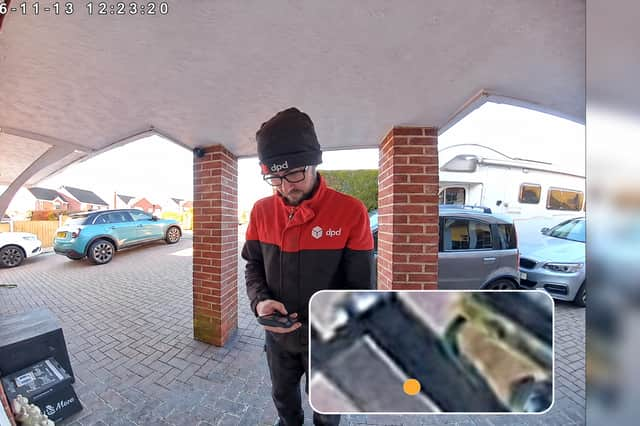

The radar works alongside motion sensors to help identify activity and reduce unnecessary notifications. You can also set activity zones, which should be particularly useful if your front door overlooks a pavement or a busy driveway. The customisation does take a while, but it's so useful and quite easy to fine tune.
The camera’s 180-degree diagonal view is another sensible inclusion. Seeing a visitor’s face is useful, but so is seeing the parcel they’ve put down beneath the camera. Tapo pitches this as head-to-toe coverage, rather than a narrow view of whoever happens to lean towards the button. The reality is, you'll see less than you would with a dual lens camera, but it's among the best single-lens cameras I've tested.
There’s also a choice of infrared and colour night vision, with built-in lighting to help after dark, and you can choose either battery power or hardwiring.
Two-way audio, recorded quick responses and doorbell calls cover the everyday essentials. There’s even voice masking, should you prefer not to sound like yourself when answering an unfamiliar visitor. Tapo really has thought of everything with this superb little device.
What I didn’t like about the Tapo D260
The price needs some consideration. Avoiding a subscription is welcome, but £219.99 is still a substantial upfront investment, particularly once you add a memory card. And it's worth noting there are other subscription-fee cameras out there. Eufy and Ezviz doorbells are among the most impressive.
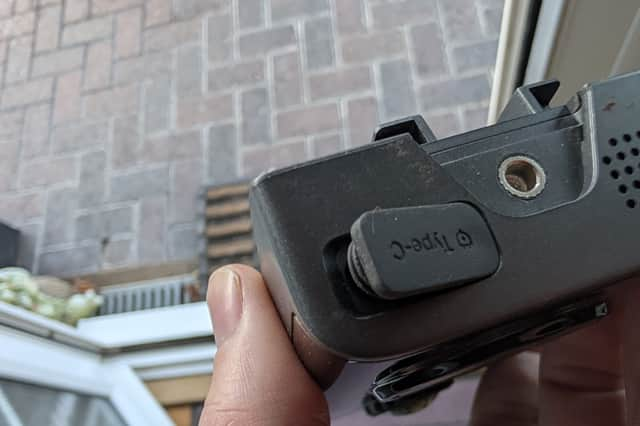
The lack of an included indoor chime is a shame. It's mitigated somewhat by an ability to alert your Google or Alexa devices, but at this price point, including a chime would have been nice.
Battery life is very impressive, and it seems to improve with use. There are also features you can turn down to prolong it.
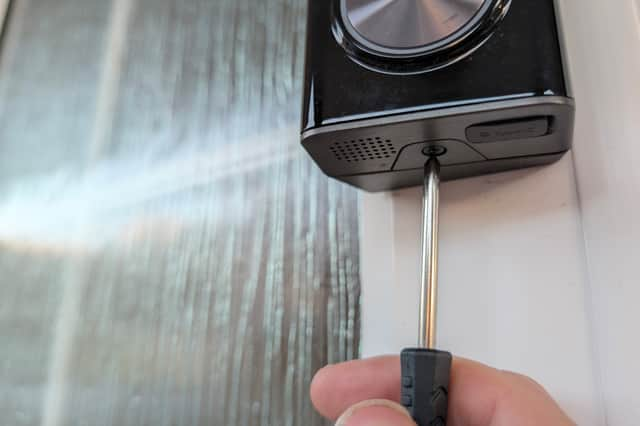
To recharge it, you need to remove the device from its mounting which, oddly, is done by unscrewing a captive screw. I can't decide whether I prefer the more conventional SIM-ejector style system of other doorbells, but it's simple enough.
It's worth nothing that battery operation doesn’t provide the same recording experience as hardwiring. If continuous footage and pre-roll are priorities, you’ll need a suitable wired supply. Existing traditional chimes must also be bypassed for that mode, so it’s worth checking the installation requirements carefully.
Local storage has a compromise of its own. A card inside the doorbell keeps things simple, but leaves recordings in the device outside. Anyone particularly concerned about theft should consider the compatible hub storage options or stump up for the cloud backup, which isn't too expensive and does add in a couple of useful enhancements.
Overall verdict: Should you buy a Tapo D260?
I’d put the D260 on the shortlist if you want some of the best doorstep footage available, and you value its useful detection features without committing to a monthly bill.
It's easy to install, easy to use, and Tapo's app is probably the best in the business.
There's an argument that this camera might suit someone who's already bought into the Tapo ecosystem, because you're likely to already have a hub, and that gets around the annoying lack of a supplied chime.
But picture quality, notification speed, and detection accuracy are just about as good as it gets, so it might come at a hefty price, but boy does it justify it.