
Royal Navy divers honoured after disposing of 250 deadly bombs and explosives
Royal Navy divers who tackled wartime bombs, chemical weapons and forgotten explosives across the globe have been recognised for their lifesaving work.
Royal Navy divers who spent 2024 tackling a terrifying legacy of bombs, shells and explosives have been handed the military’s highest humanitarian award.

Bravo Squadron of the Diving and Threat Exploitation Group received the prestigious Firmin Sword of Peace after safely dealing with more than 250 explosive devices during a single year.
The 42-strong team, split between Portsmouth and Devonport, works around the clock and is regularly called in to help police and councils when unexploded wartime ordnance turns up.
Its 2024 missions included some seriously challenging jobs – from a huge Second World War bomb in Plymouth to chemical weapons on the Welsh coast and ageing demolition charges on the tiny Pacific island of Pitcairn.
The squadron was presented with the sword by Firmin’s Head of Operations Ian Smith at Portsmouth Naval Base.
The award is particularly significant as 2024 marked the 60th anniversary of the Sword of Peace. Originally awarded by Wilkinson and presented by Firmin & Sons since 2005, it recognises the Armed Forces unit judged to have made an outstanding contribution to saving lives or humanitarian work.
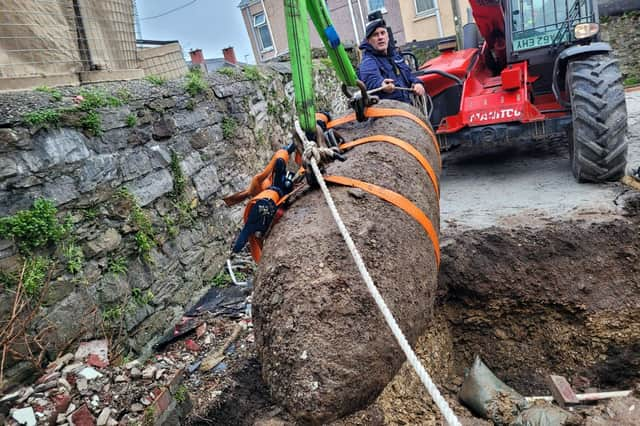
One of the biggest operations came in February 2024, when the divers were called to deal with a 500kg Luftwaffe bomb discovered at Keyham in Plymouth.
The massive wartime device caused major disruption as the team worked for three days to make it safe, transport it by road and sea, and finally detonate it without causing further damage or injury.
Then came Project Pongee on the Gower Peninsula, where more than 275 pieces of unexploded chemical and high-explosive ordnance had surfaced on former military ranges.
The site is now a nature reserve attracting thousands of visitors, making the dangerous discoveries particularly concerning. The team spent a week methodically neutralising the shells and ammunition.
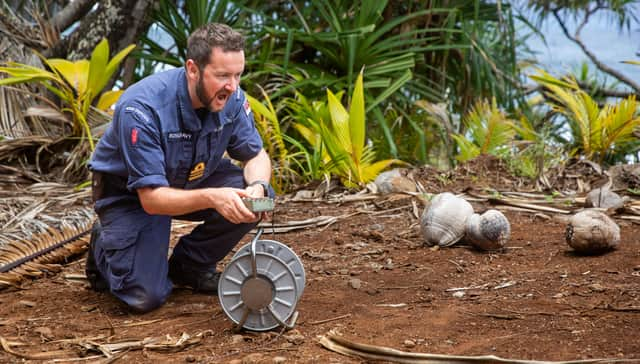
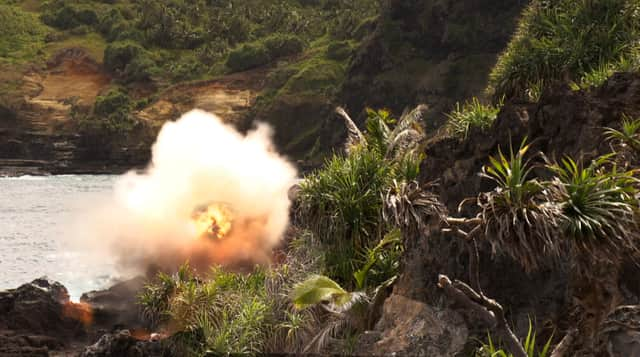
Thousands of miles away, the squadron joined patrol ship HMS Tamar for a mission to Pitcairn, where deteriorating demolition charges left over from the construction of the island’s harbour were threatening local residents.
With just 48 hours to complete the operation in difficult conditions, the divers got the job done and received widespread praise from islanders.
They ended the year with another huge challenge – a 1,000kg wartime bomb discovered on Southsea Common, which was moved to the Solent and safely detonated.
Commanding Officer Lieutenant Commander Benjamin Brown said the squadron’s work demonstrated “selfless service, protection of life, and humanitarian impact”.
He added that the team had shown courage and professionalism both at home and overseas while helping to deal with a “lethal explosive legacy”.